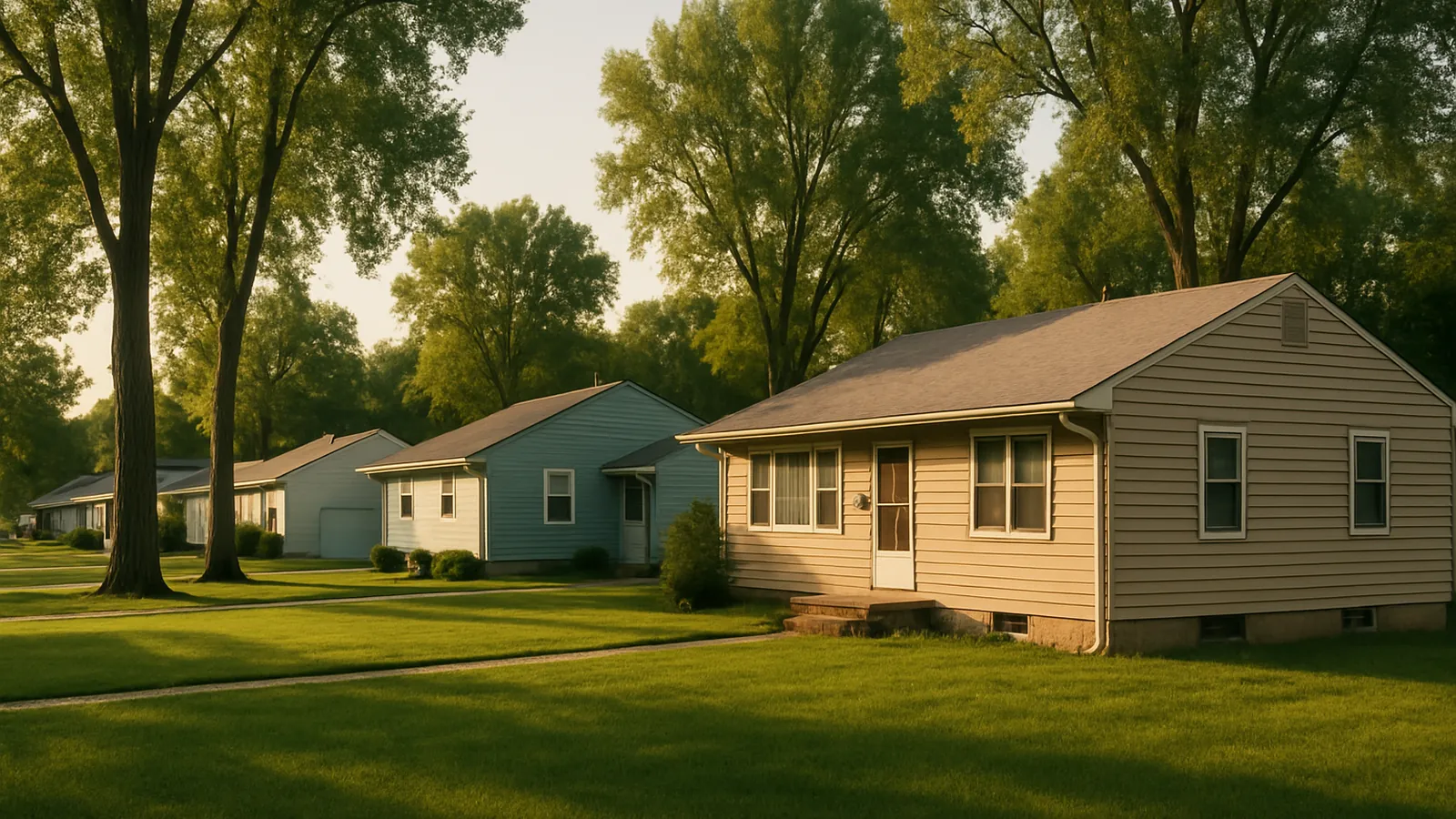
Foundation repair in Topeka costs $4,000–$15,000 for most full repairs, with piers $1,200–$3,000 each and bowing wall repair $2,500–$10,000. Shrink-swell clay across Shawnee County cycles between a wet spring and a dry late summer, and full basements make wall movement the signature local failure.
Below: how to read the symptoms, why Kansas soil behaves this way, and what each repair actually does.
What a moving foundation looks like in a Topeka house
This market produces two symptom families, and most houses show one or the other rather than both:
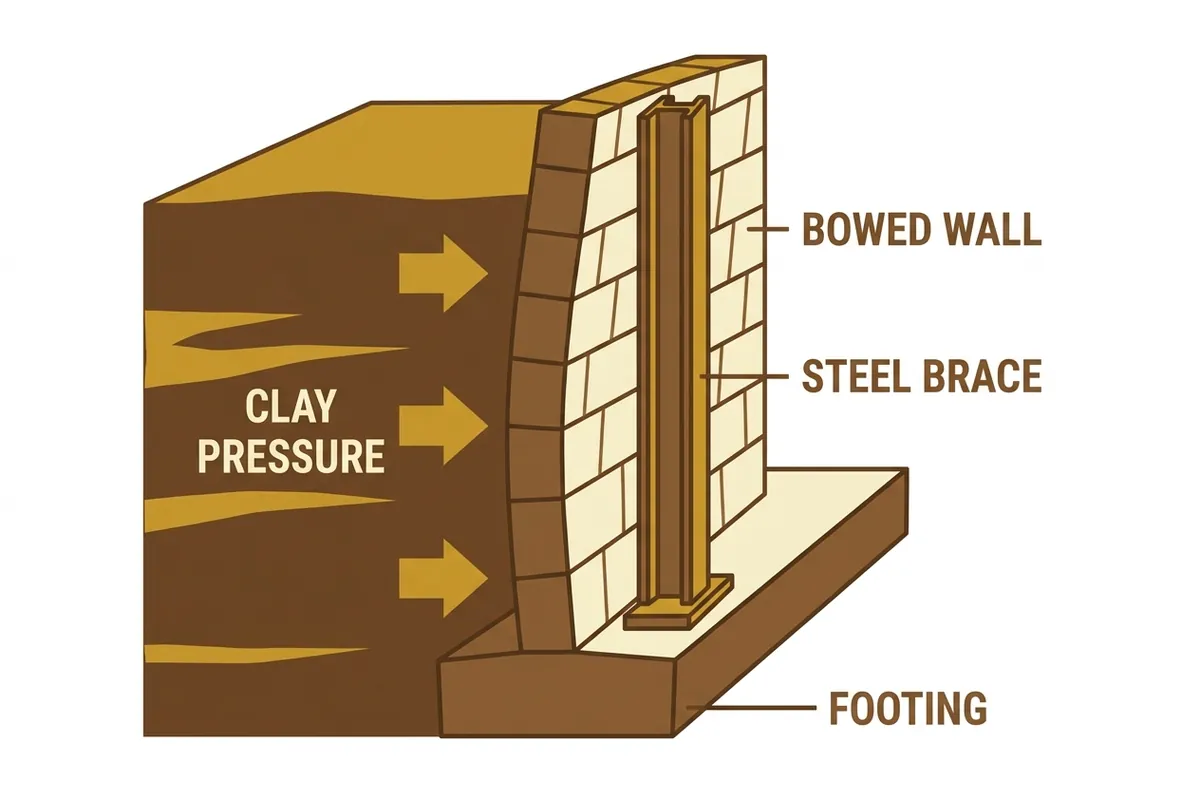
- A horizontal crack partway up a basement wall — the signature of sideways clay pressure
- A wall visibly leaning inward, measurable with a plumb line or straightedge
- Stair-step cracks through brick or block — masonry tracking a footing that dropped
- Doors sticking in August and freeing up after the spring rains
- Diagonal drywall cracks running off door and window corners
- Floors sloping, or gaps opening under baseboards
The first two belong to the wall; the rest belong to the footing. That distinction decides the repair and the price, and a plumb line plus a laser level separates them in about an hour.
Kansas clay doesn't just move — it ratchets
Shawnee County sits on deep silty clay loams over loess and glacial deposits, with high shrink-swell clay common throughout. Roughly 36 inches of rain a year arrives unevenly: pronounced wet springs, then late summers dry enough to open visible cracks in bare ground. The foundation never experiences the annual average — it experiences the swing.
Against a basement wall, that swing does something worse than push. As the clay dries and pulls back, it opens a gap along the wall; loose soil and debris wash into it. When the clay swells again in spring, it can no longer return to the volume it left — so it presses outward into the wall instead. Repeat that annually and the wall accumulates deflection it never recovers. That ratcheting is why Topeka basements bow rather than simply crack, and why Kansas freeze-thaw cycling on top of it adds frost pressure to an already-loaded wall.
The repairs that fix Topeka houses
| What you see | What's happening | The fix | Typical range |
|---|---|---|---|
| Stair-step cracks, dropped corners, sloping floors | Footing losing support as clay contracts | Piers below the active zone | $4,000–$15,000 |
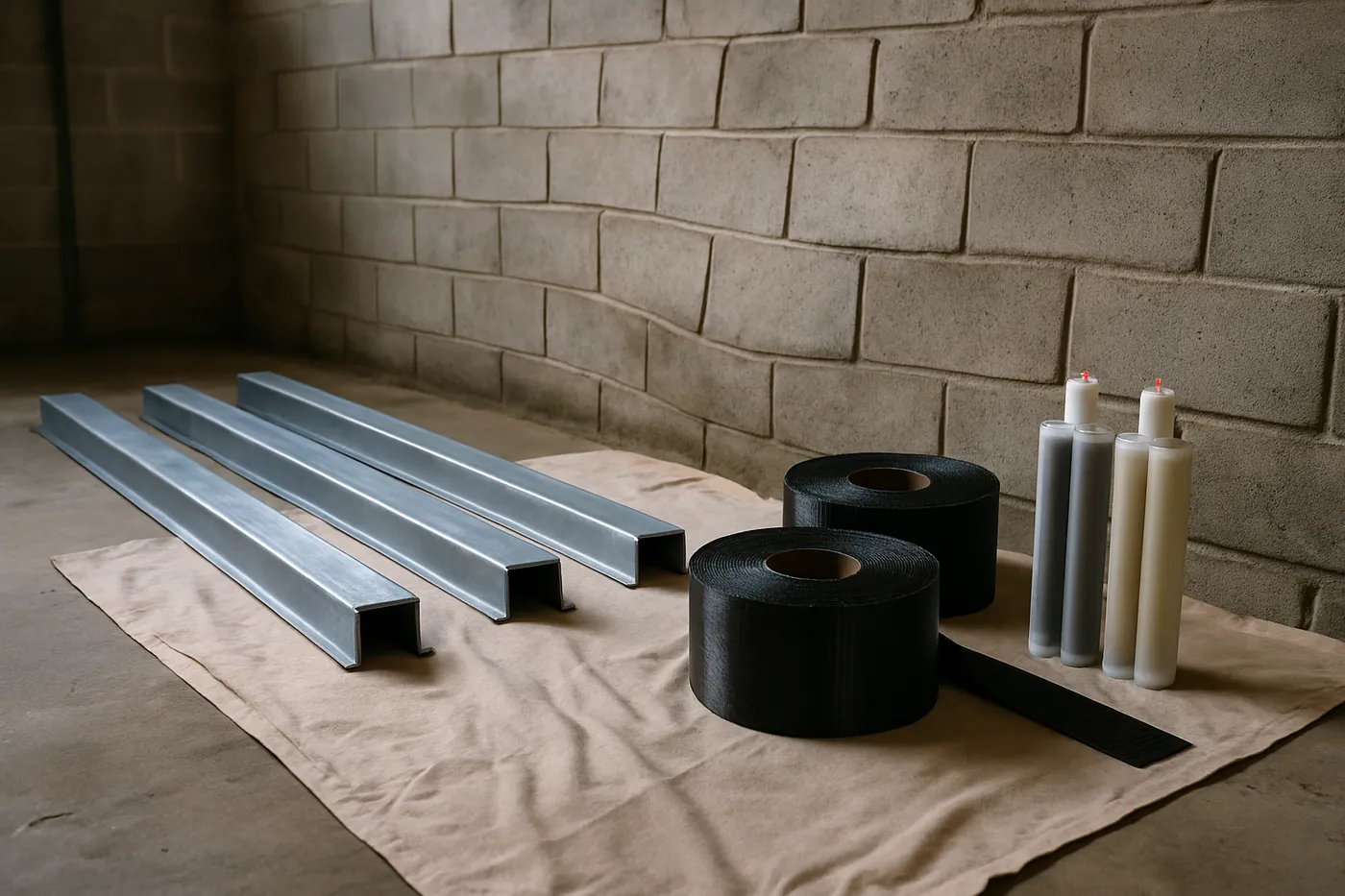
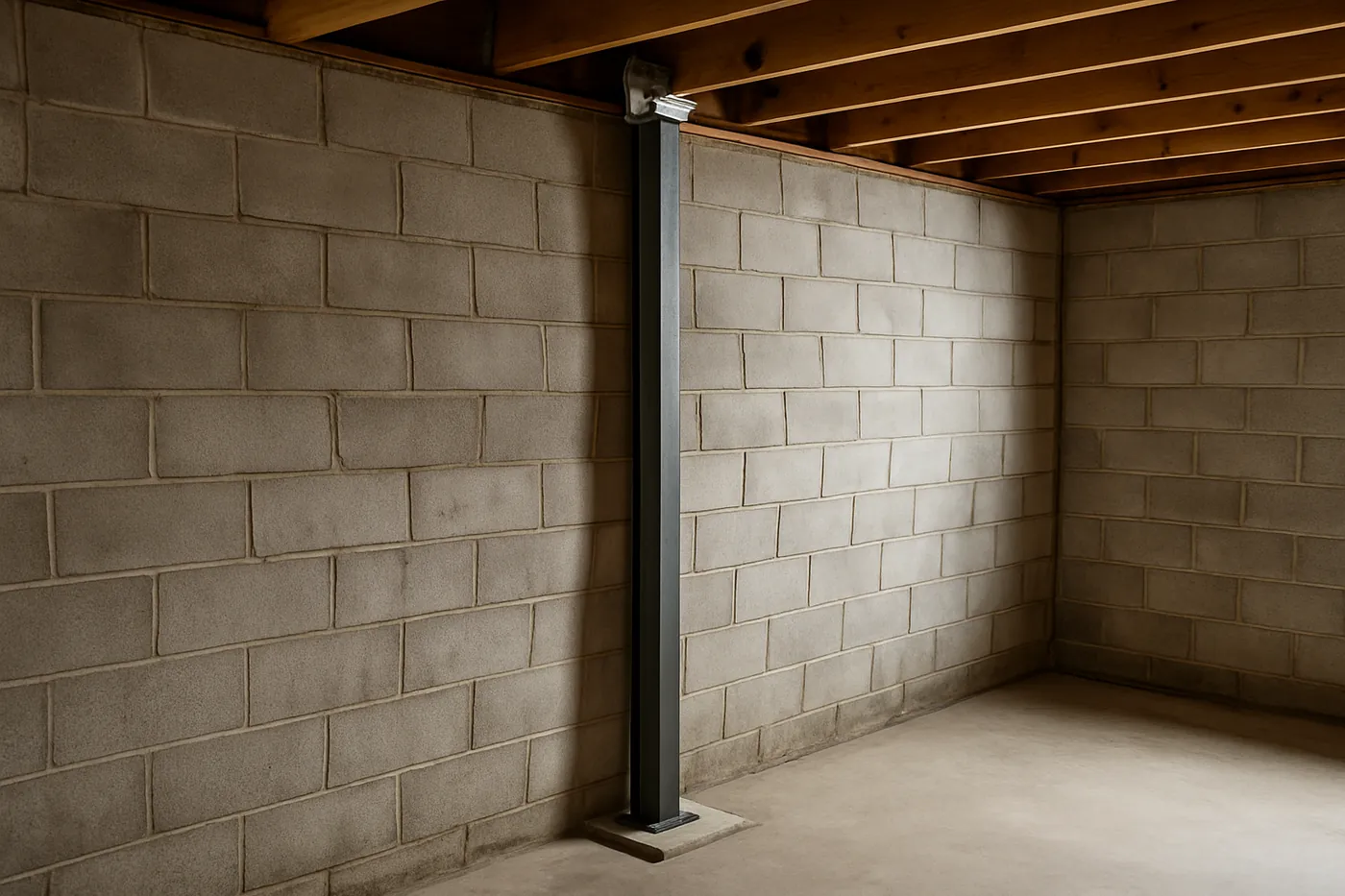
| Horizontal crack, wall leaning inward | Clay ratcheting sideways against the wall | Carbon fiber, braces, or anchors | $2,500–$10,000 |
| Cracks widening between spring and August | Seasonal movement opening paths through masonry | Injection and reinforcement | $400–$1,500 |
| Water at the cove joint, damp basement, musty air | Roof and lot water feeding the moisture cycle at the wall | Drainage and sealed sump | $2,500–$8,000 |
| Sunken driveway, patio, or walk panels | Flatwork riding the clay with no footing beneath | Polyurethane lifting | $500–$2,500 |
Most Shawnee County houses need two of these, not five — and which two is a measurement question rather than an opinion. The decisions behind the table have their own pages: how we diagnose settlement before naming a fix, when helical piers beat push piers, whether exterior or interior waterproofing fits an occupied basement, what insurance actually covers, and when to bring in an independent structural engineer.
Loess: the reason some settlement arrives all at once
Northeast Kansas carries substantial loess — wind-deposited silt laid down after the glaciers — and loess behaves unlike clay in one important way. It is metastable: dry, it stands up remarkably well and holds near-vertical cuts; thoroughly saturated, it can lose that structure and collapse.
Practically, that means a share of settlement in this region isn't seasonal at all. A supply line leaking under a slab, a downspout discharging in the same spot for years, or an irrigation line running long against the house can saturate loess and drop a footing on a timeline measured in weeks rather than decades. When the pattern looks sudden and localized rather than gradual and seasonal, we recommend testing for a water source before anyone prices structural work — because piering over an active leak buys you the repair twice.
How the evaluation works
We plumb every basement wall and record the largest deflection, measure and photograph each crack with its orientation noted, shoot floor elevations with a laser, and walk the outside for the water story — gutters, downspout terminations, grading, and where the lot sends runoff. You get a written scope naming the cause, the sequence, the price per line, and the timeline — free, and yours to compare against any other bid.
Foundation questions Topeka homeowners ask
How much does foundation repair cost in Topeka?
Most full repairs run $4,000 to $15,000, with piers commonly $1,200 to $3,000 each, bowing wall repair $2,500 to $10,000, and crack repair from about $400. What sets your number is how much of the foundation moved and how far a wall has deflected. Every figure follows a free measured evaluation. Our Foundation repair cost breakdown for Topeka shows what drives each figure, line by line.
Why do Topeka basement walls lean inward?
Clay that shrinks and swells does it by ratcheting. A dry Kansas late summer pulls the soil back from the wall and opens a gap; debris and water settle into it; then the wet spring swells the clay again, and it can no longer occupy its old space. Each cycle gains a little ground, and the wall takes the difference.
What's the difference between a vertical and a horizontal crack?
Direction tells you the force. Vertical and diagonal cracks usually mean something below moved — settlement or shrinkage. A horizontal crack running along a mortar joint partway up a basement wall means something pushed sideways, which in Shawnee County is nearly always clay pressure. Horizontal is the serious category regardless of width.
My doors stick in August and free up in spring. Normal?
That's the Kansas moisture cycle, and it's the most common early symptom here. Mild seasonal sticking that fully reverses can be watched with a dated pencil mark. Sticking that gets worse year over year, or that arrives with new stair-step cracks, means the footing is losing ground each cycle rather than just flexing.
What is loess, and why does it matter to my foundation?
Loess is wind-deposited silt, common across northeast Kansas, and it has an unusual property: it holds together well when dry but can lose structure and collapse when thoroughly saturated. That means a plumbing leak or a downspout soaking one area can produce sudden settlement in loess that no seasonal cycle would explain.
Should I water my foundation during a Kansas drought?
Consistent moderate moisture at the drip line during extended dry spells does reduce the shrink half of the cycle — a soaker hose on a timer, not a flood. It's mitigation rather than repair: a footing that has already settled needs bearing, not irrigation. Overdoing it creates the opposite problem, especially over loess.
How deep do piers go here?
Past the active soil zone to material that carries load without seasonal movement. Piers are driven hydraulically until they refuse further advance, with refusal pressure logged per pier. Depth varies a lot across this region — river-valley lots, glaciated ground north of the Kaw, and the shallower bedrock south of it all read differently.
Will homeowner's insurance cover it?
Usually not. Standard policies exclude earth movement and settling, which is exactly what this soil does. Sudden events are the exception — a plumbing leak washing out soil beneath a footing sometimes qualifies, and on collapsible loess that scenario is more common than people expect. We document cause and timeline during the evaluation.
Foundation repair across northeast Kansas
Lawrence · Silver Lake · Rossville · Auburn · Carbondale · Osage City · Holton · Perry · Meriden · all service areas
Get a free Topeka foundation evaluation
Tell us what the house is doing — a basement wall leaning in, stair-step cracks, doors that stick every August, sloping floors — and we’ll schedule an evaluation with photos, wall measurements, and floor elevations. We reply the same business day.