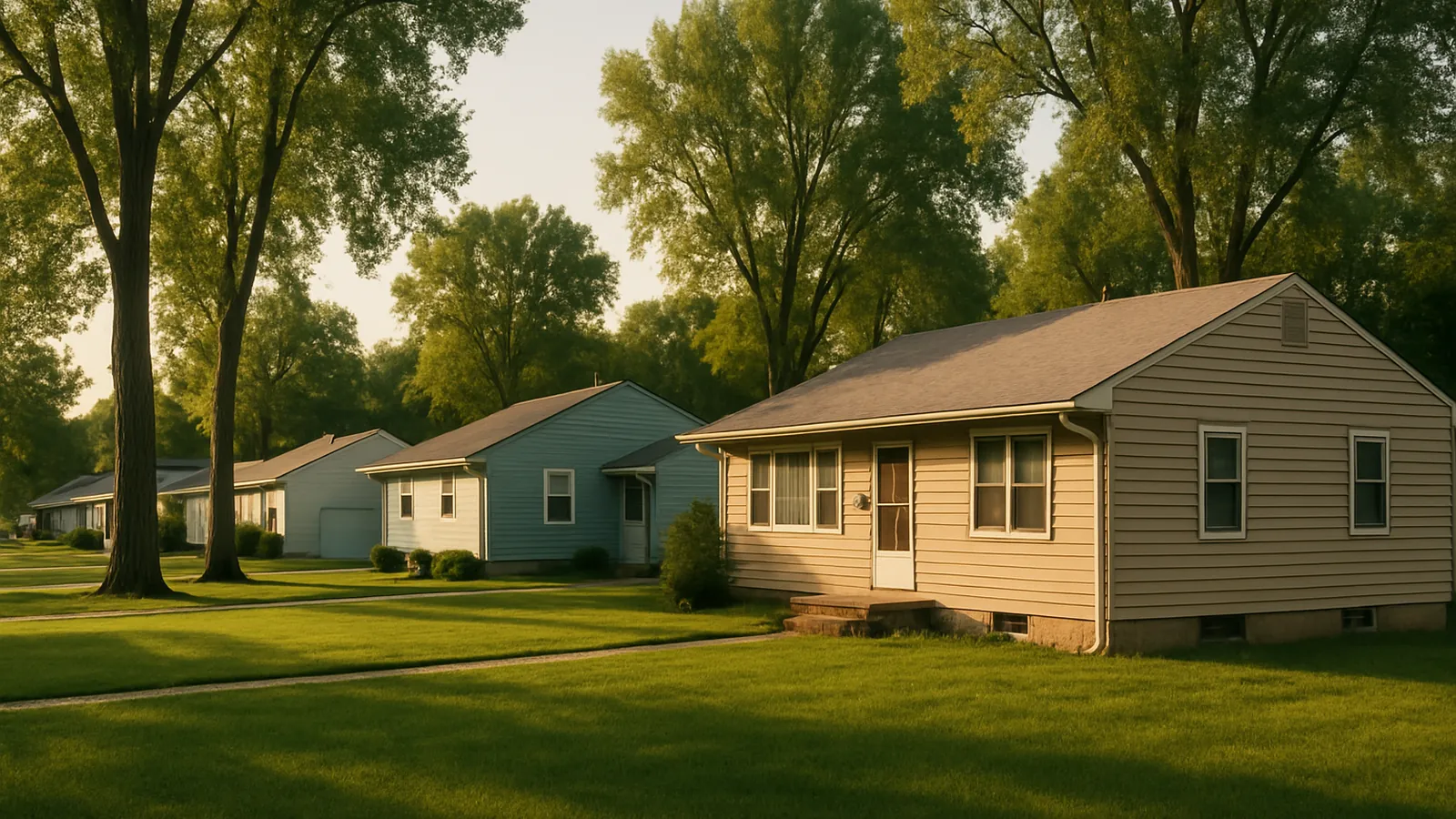
Foundation piering in Topeka runs $1,200–$3,000 per pier, with most settlement repairs needing three to eight piers — $4,000–$15,000 for the job. Piers are driven through the active soil zone to stable bearing, with refusal pressure logged individually rather than driven to a specified depth.
Here's what settlement actually is on Kansas clay, and how a pier ends it.
Settlement is the soil withdrawing support
A footing doesn't sink because the house grew heavier. It sinks because the ground beneath it stopped holding. Shrink-swell clay across Shawnee County carries substantial water through a wet spring and gives it up through a dry late summer — and as it dries, it contracts, leaving voids the footing settles into. Run that through enough Kansas cycles and the corner that dries fastest sits measurably below the rest of the house.
That's why cosmetic repair fails here. Sealing the resulting crack leaves the mechanism running underneath, and the next dry August reopens it. The permanent fix is to stop depending on the layer that moves.
How a pier ends the argument
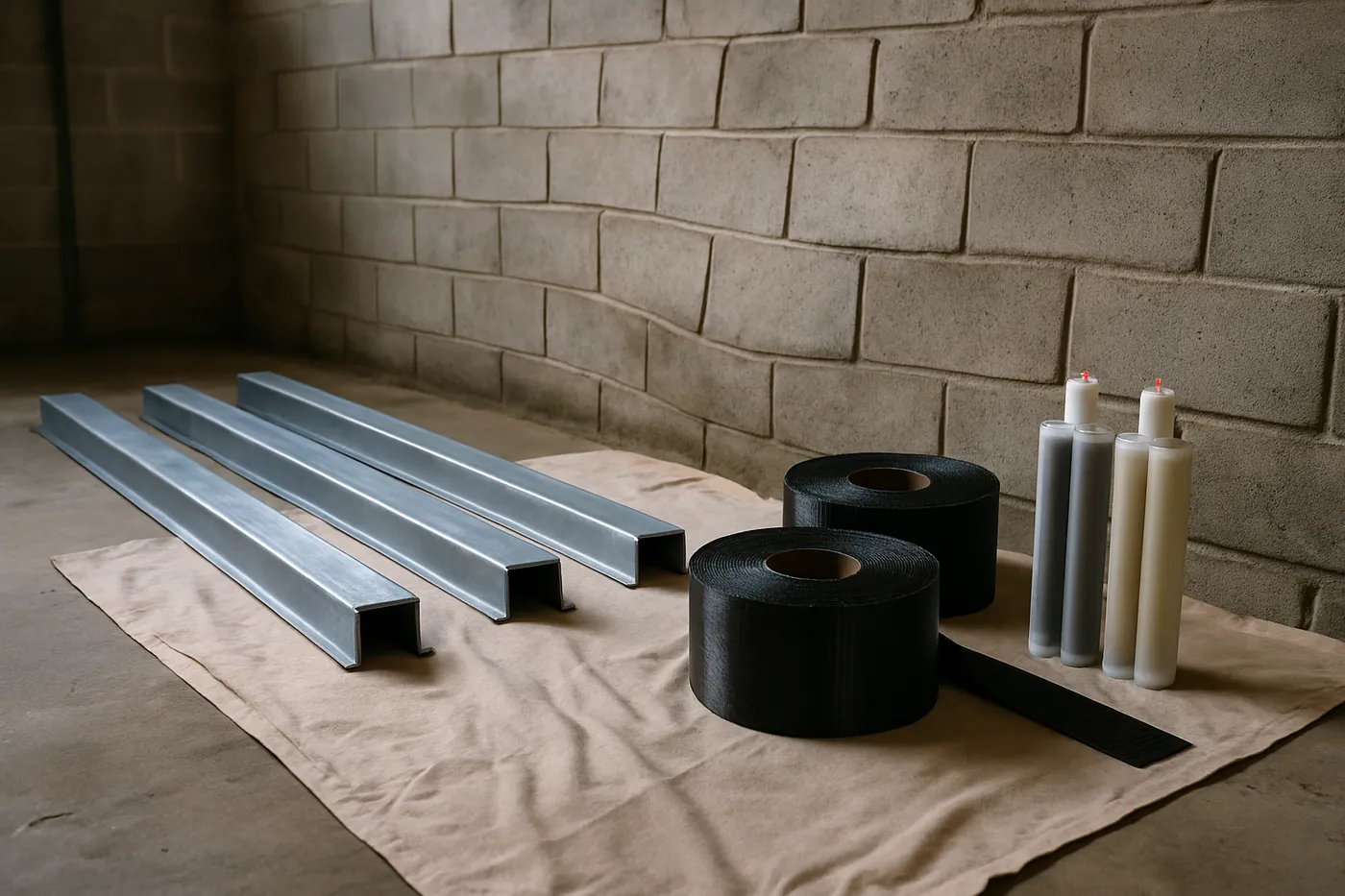
A steel pier is a column driven hydraulically beneath the footing, section by section, until it refuses to advance — meaning it reached material that carries load without seasonal movement. A bracket bolted to the footing transfers the house's weight onto that column. From then on, the footing stands on something indifferent to the weather.
Refusal depth varies more across this region than homeowners expect, and that variation is geological rather than arbitrary. North and east of the Kansas River, glacial till and thick loess run deep. South of it, the Osage Cuestas bring limestone and shale much closer to the surface, so piers can reach refusal quickly. Each pier is driven to its own depth and its refusal pressure recorded — which is what separates engineered work from a crew installing every pier to the same number.
What sets the pier count and the price
- The affected run — defined by floor elevations, not by the size of the house
- Depth to stable bearing — deeper refusal means more pier sections per location, and that varies by which side of the Kaw you're on
- Foundation type — full basement walls, crawl footings, and chimney or porch footings each carry different bracket work
- Access — mature landscaping and tight side yards in the older neighborhoods add labor hours
Timeline and living through it
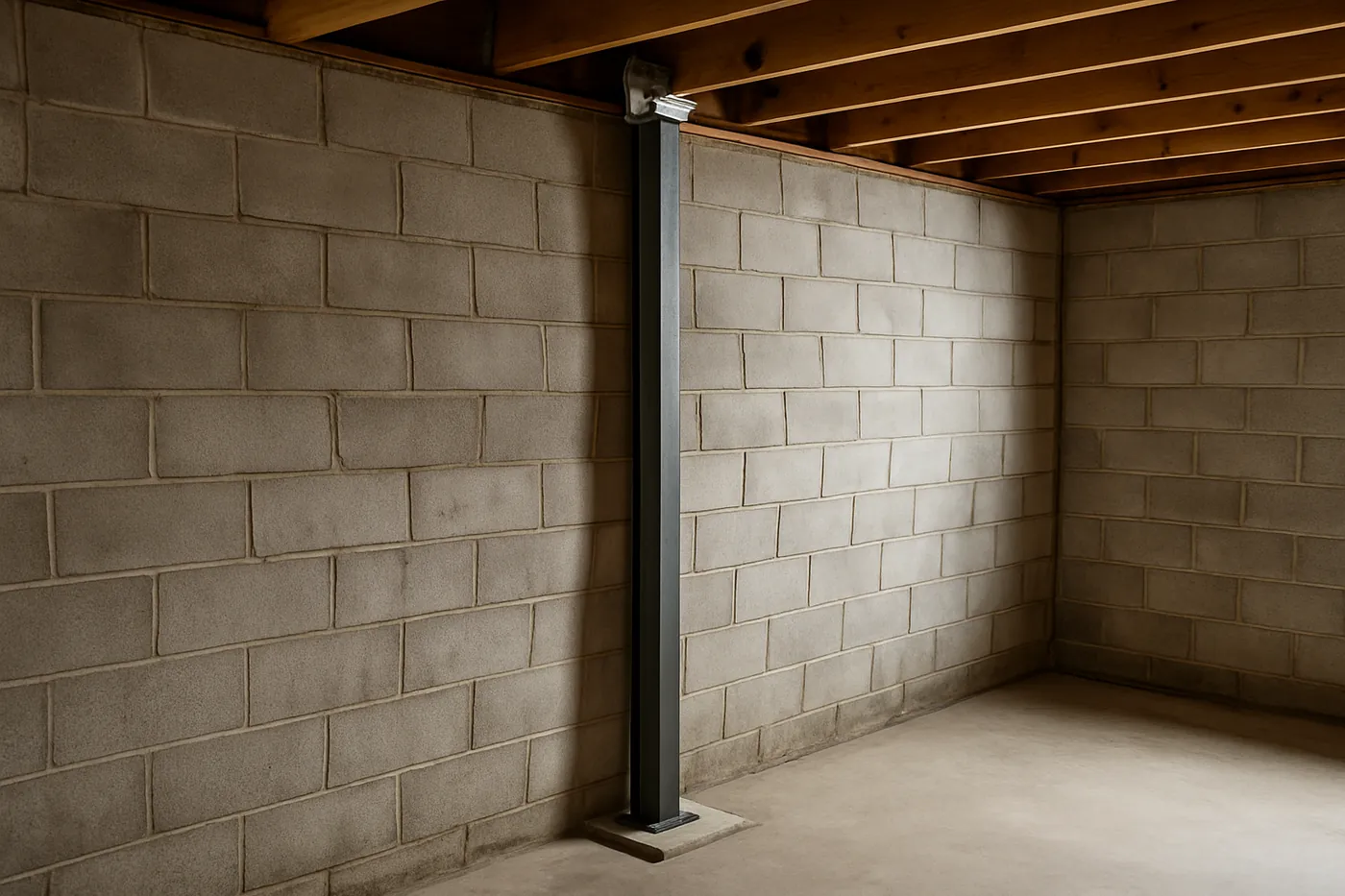
Most piering jobs run two days to a week depending on count and access, and the house stays livable throughout. Lift is synchronized across piers and monitored against interior crack widths. You receive the pier log, stage photographs, and warranty paperwork at completion.
Which pier belongs under this house?
Loess and glacial deposits run deep under Shawnee County, so piering here is usually about finding dependable bearing well below the seasonal moisture zone rather than hitting shallow rock.
| Option | What it does | What the ground here decides |
|---|---|---|
| Pushed steel | Pressed to refusal against the house's own weight | Drives run deeper here than in rock country — the price of deep loess |
| Screwed steel | Advanced until a measured torque is reached | The measured choice for lighter structures and porch additions |
| Cast concrete | Placed and cured against firm strata | Used where a cast bearing below the frost and moisture zone makes sense |
Depth quotes vary between bids here because the ground genuinely varies. What matters is the verification method — refusal or torque — not the round number of feet.
Piering questions, straight answers
How many piers does a Topeka house usually need?
Most settlement repairs use three to eight piers, placed where the floor-elevation survey shows the footing actually dropped rather than spaced evenly around the perimeter. Counts cluster along one run more often than they spread — commonly the side that dries hardest through a Kansas August, or the side with the drainage problem.
How deep do piers go around here?
Past the active soil zone to material that carries load without seasonal movement. Piers are driven hydraulically until they refuse further advance, with refusal pressure logged per pier. Depth varies widely across this region: Kaw valley alluvium, glaciated ground north of the river, and the shallower bedrock south of it all behave differently.
Will piering lift my house back to level?
Often partially, sometimes fully — stabilization is the promise and recovery is the bonus. Lift is attempted where the structure can safely take it and monitored against interior crack widths in real time. On a house that has cycled through decades of Kansas summers, some movement is permanent, and we say so before starting.
Can you work around a finished basement?
We can work around a finished basement. Exterior piering happens entirely outside, so finished space stays untouched. Where interior piers are genuinely required, the scope names each location before work starts. On a house with both a settling footing and a leaning wall, we sequence the two so nothing gets installed twice.
Is the work warrantied?
The piers carry a transferable warranty, and the documentation matters at resale — Kansas buyers' inspectors know this soil and look for repairs that were engineered rather than guessed. Ask for warranty terms in writing on every bid you compare, including ours, and keep the per-pier refusal log with it.
Get a free Topeka foundation evaluation
Tell us what the house is doing — a basement wall leaning in, stair-step cracks, doors that stick every August, sloping floors — and we’ll schedule an evaluation with photos, wall measurements, and floor elevations. We reply the same business day.