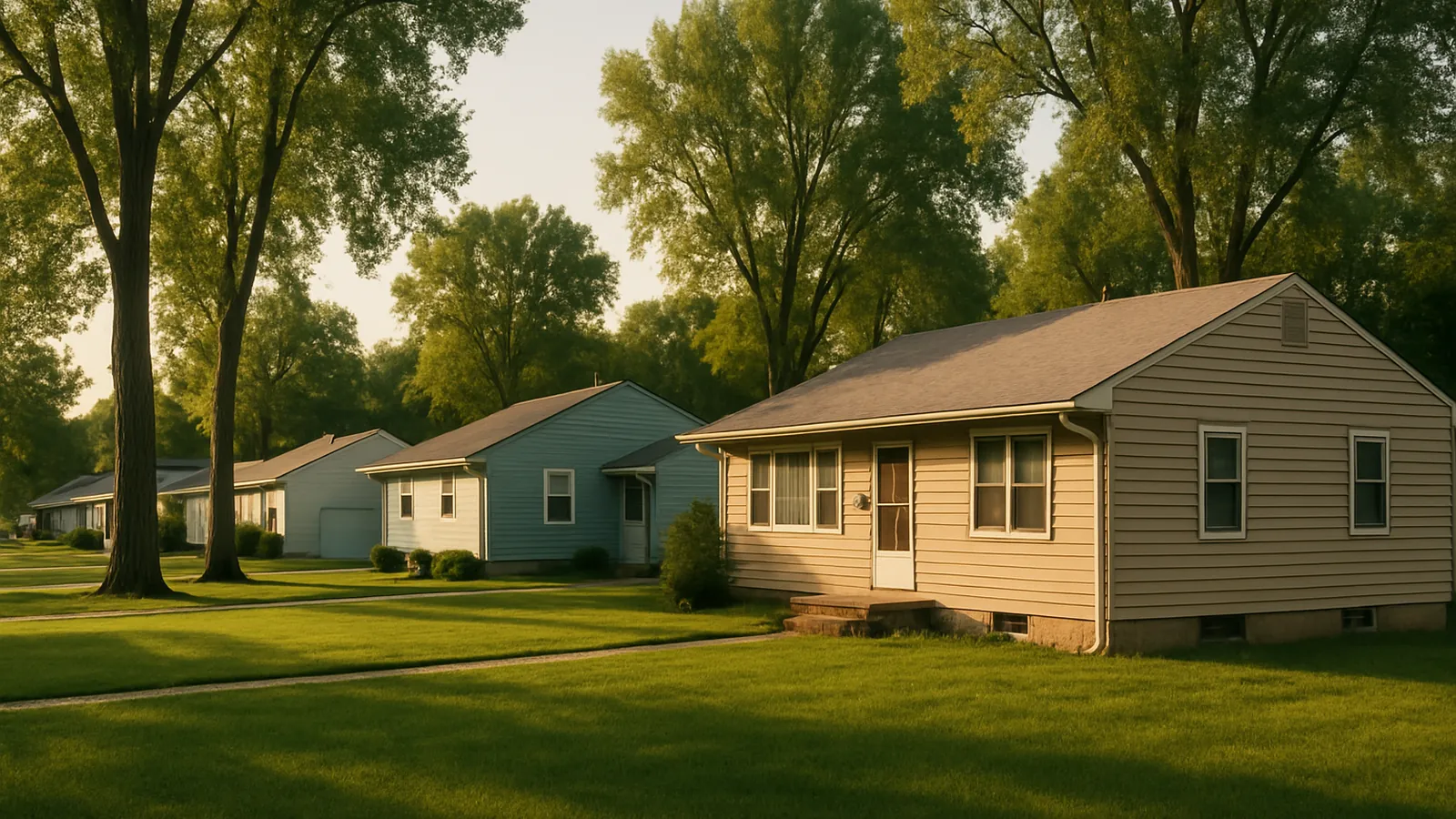
Full basements are standard across Shawnee County, so basement wall movement is the signature local failure and the subject of most questions below - along with what loess does when it gets wet, and what frost adds on top of it.
How do I know if I have a problem?
Doors that stick in one season and swing free in another, a crack that keeps reappearing after it is filled, floors that feel out of level near one wall — these are the things people notice first, and they are worth understanding before they are worth worrying about.
How urgent is my foundation problem?
Direction and deflection decide it. A dry vertical crack that hasn't changed through a full wet-dry cycle can be watched. A horizontal crack in a basement wall, any visible lean, or shearing where the wall meets the sill deserves a measured look soon — and past two inches of deflection, promptly. The evaluation is free, so the threshold for calling is low.
What makes Topeka soil difficult?
Shrink-swell clay plus full basements. Roughly 36 inches of rain arrives unevenly — pronounced wet springs, dry late summers — and against a basement wall that swing ratchets: the clay pulls back, debris fills the gap, and it can't return to its old volume when it swells. Kansas freeze-thaw adds frost pressure on top.
Why do pier depths vary so much in this area?
Because the last glaciation stopped near the Kansas River. North and east of it, deep glacial till and loess can send a pier a long way before it finds bearing. South of it, the Osage Cuestas put limestone and shale near the surface and piers refuse sooner. Sections are priced individually, so depth is money.
Will insurance pay for it?
Usually not — standard policies exclude earth movement and settling, which is exactly what this soil does. Sudden events can be exceptions, and on collapsible loess a plumbing leak washing out soil beneath a footing is more common here than people expect. We document cause and timeline during the evaluation.
What does foundation repair cost in Topeka, and why do quotes differ?
What a repair costs here depends on how much of the foundation moved and how deep the piers have to go, which is why two honest quotes can differ.
What does repair cost?
Most full repairs run $4,000 to $15,000, piers $1,200 to $3,000 each, bowing wall repair $2,500 to $10,000, basement drainage $2,500 to $8,000, and crack work from about $400. The cost guide breaks down every range and what moves it.
What happens if I go ahead?
What actually happens once you say yes — timings, paperwork, and what carries over if you sell.
Does the warranty transfer if I sell?
Ours are written to transfer, and that paperwork matters here — Kansas buyers' inspectors open every basement door and know what a leaning wall means. Keep the per-pier refusal log and stage photos with the warranty; the package is what satisfies an inspector, not the invoice.
How long does the work take?
Crack injections take hours. Concrete leveling is usually an afternoon. Wall restraint runs one to three days. Basement drainage typically two to four days. Piering runs two days to a week depending on count and access. Your written scope states the timeline before work begins.
What if I just want a second opinion?
That's a legitimate reason to call and we treat it as one. Bring the other bid — our evaluation shows the measurements behind each recommendation, which makes comparison fast. Sometimes the honest outcome is confirming the other company got it right, and we'll say so.
Still deciding?
The cost guide explains every range in detail, and our services covers each repair type. When you're ready, the free evaluation puts numbers on your specific house.
Get a free Topeka foundation evaluation
Tell us what the house is doing — a basement wall leaning in, stair-step cracks, doors that stick every August, sloping floors — and we’ll schedule an evaluation with photos, wall measurements, and floor elevations. We reply the same business day.