Foundation crack repair in Topeka runs $400–$1,500 for most injections and reinforcement. Direction decides urgency: horizontal cracks in a basement wall signal clay pressure and get structural attention, while vertical and diagonal cracks are usually settlement or shrinkage.
Here's how Topeka cracks get triaged before anyone quotes material.
Direction tells you more than width does
This market writes cracks in a few distinct hands, and the orientation is the first diagnostic:
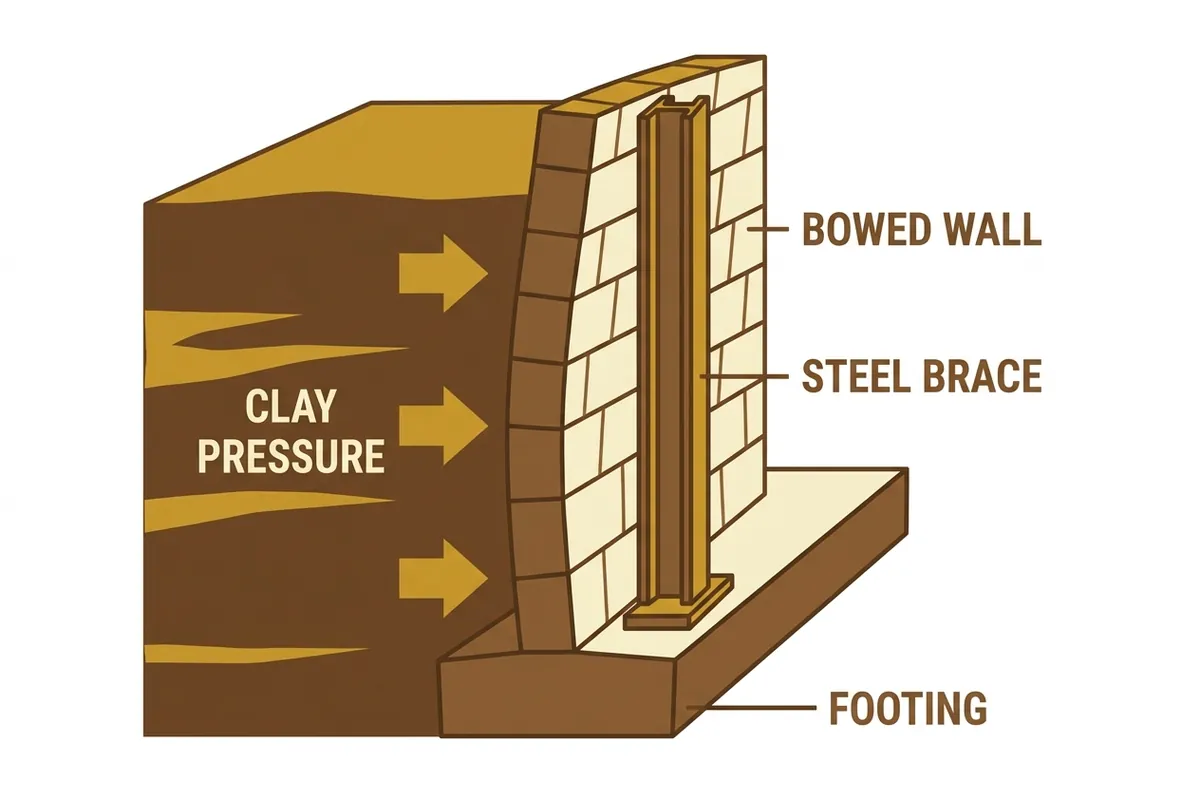
- Horizontal, partway up a basement wall — clay pressure. The serious category, at any width, and it belongs on the bowing wall track rather than the injection track.
- Stair-step through mortar joints — differential settlement below, tracking a footing that moved
- Vertical, in a poured wall — most often shrinkage from the original cure; common, and a water problem rather than a structural one
- Diagonal from a window or door corner — stress concentration at an opening, from settlement or from wall movement
The free test costs a pencil: mark both ends, date it, photograph it, and look again after a full Kansas cycle. A crack that widens through August has told you the mechanism is still running.
A crack that appeared suddenly deserves a different question
Seasonal cracks arrive gradually and breathe with the weather. A crack that showed up over a few weeks, localized to one area, with no seasonal history behind it, is a different animal — and in this region the leading suspect is water reaching soil that can't take it. Loess saturated by a supply-line leak or years of concentrated downspout discharge can lose structure and drop a footing quickly. When the pattern reads sudden rather than seasonal, testing for a water source comes before pricing structural work.
Material follows the diagnosis
- Polyurethane injection — flexible, water-stopping, the usual choice where seasonal movement continues
- Structural epoxy — rigid load transfer, when an engineer specifies it and the cause is corrected
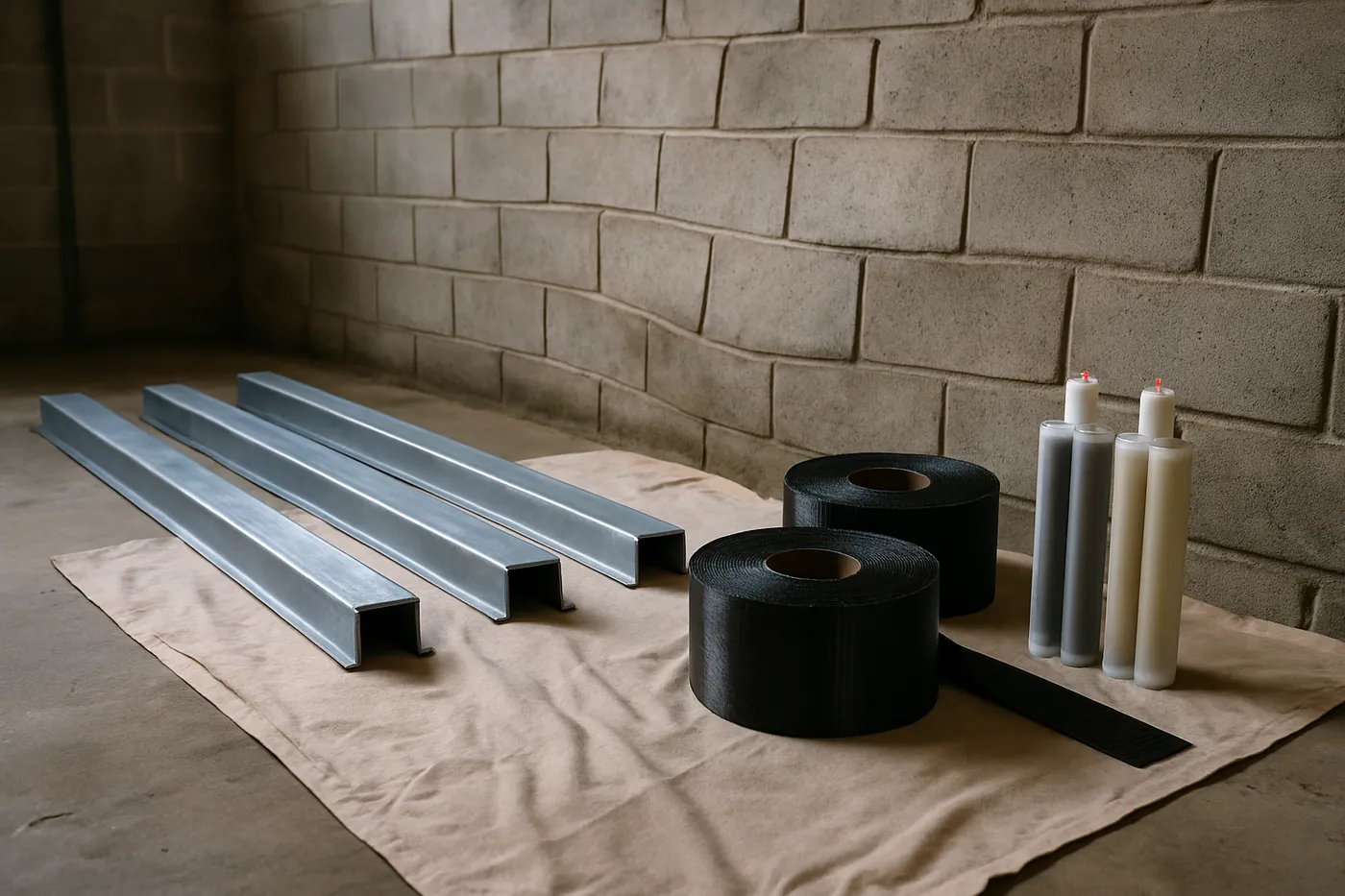
- Carbon fiber staples — across cracks with a documented widening history
- Mortar repointing — restores brick and sheds water once the structure below is stable
Why we quote the cause beside the crack
Sealing is inexpensive. Sealing the same crack three times isn't. Every crack scope names what we believe is driving it — clay pressure, settlement, a water source, or ordinary shrinkage — and prices that separately, so you can see whether you're buying a repair or a patch on an ongoing problem.
What is the right fix for this kind of crack?
With full basements standard across Shawnee County, crack repair here is mostly basement wall repair — and those walls answer to two masters, the moisture cycle in the clay and the frost cycle above it.
| Option | What it does | How it plays out here |
|---|---|---|
| Epoxy fill | Bonds a poured wall back into one piece | Right for a poured wall that has stopped moving through a full year's cycle |
| Urethane seal | Flexible fill that stops water in a live crack | The wet-spring answer for cracks that leak but have not displaced |
| Carbon fiber | Restrains a wall that is bowing or stepping | The standard response once a block wall starts bowing under clay and frost together |
| Support first | Underpinning where the crack is only the symptom | Where the wall has rotated or slid, restraint and support come before any filler |
Basement wall movement is the signature failure in this metro. A crack is usually the first sentence of that story, and the cheap moment to act on it.
Crack questions, straight answers
Which cracks actually matter?
Direction first, then width and movement. A horizontal crack in a basement wall means sideways pressure and is the serious category here at any width. Vertical and diagonal cracks are usually settlement or shrinkage, judged on whether they widen. Any crack past a quarter inch, or one that grew between spring and August, gets measured.
Can I test it myself before calling?
You can test it yourself before calling, and it costs nothing. Draw a pencil line across the crack at both ends, write the date beside it, and check after a full wet-dry cycle. Kansas tests a crack honestly within a year — wet spring, dry August. We recommend that step openly when an evaluation doesn't find enough movement to justify work.
Epoxy or polyurethane — which do I need?
Polyurethane for water, epoxy for structure. Polyurethane stays flexible and expands on contact with moisture, which suits cracks that still move seasonally — on soil that swings this hard, that's the more common right answer. Epoxy is rigid and restores load transfer, specified where an engineer wants it and the cause is corrected.
Do you repair cracks in brick veneer?
We repair cracks in brick veneer, though brick cracks are usually a symptom rather than a cause. Repointing restores appearance and sheds water, but if the footing below is still moving, the crack returns along the same joints. Our scopes name the cause beside the masonry line so you can decide the order honestly.
Get a free Topeka foundation evaluation
Tell us what the house is doing — a basement wall leaning in, stair-step cracks, doors that stick every August, sloping floors — and we’ll schedule an evaluation with photos, wall measurements, and floor elevations. We reply the same business day.