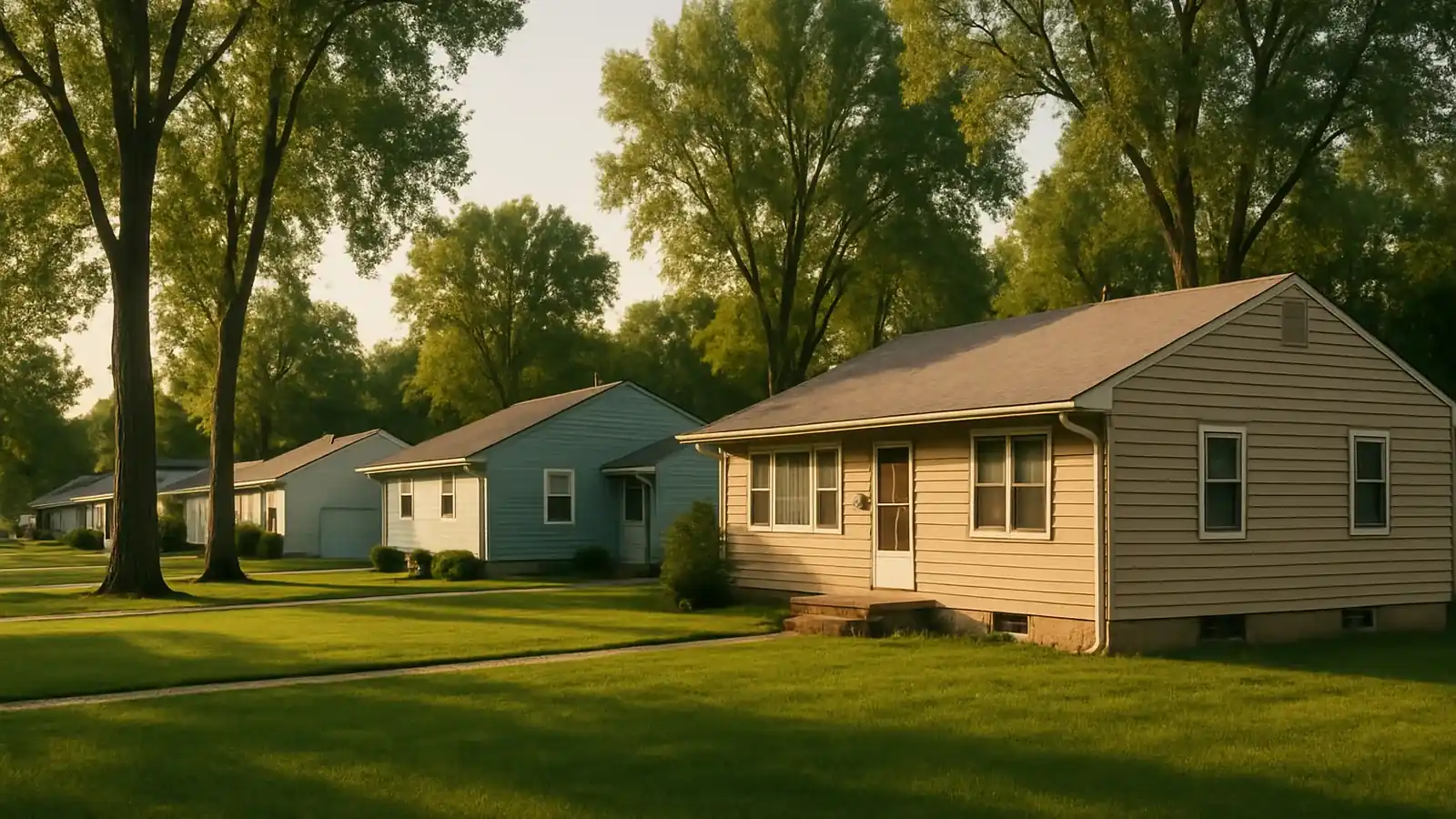
An Osage City foundation repair usually costs between $2,500 and $15,000, depending on pier count, how much the basement walls have bowed, and the drainage correction the lot requires. The cause is mostly shale-derived clay going through wet springs and dry summers. Ask whether the evaluation has a fee when the specialist calls.
A working town, and buildings that show it
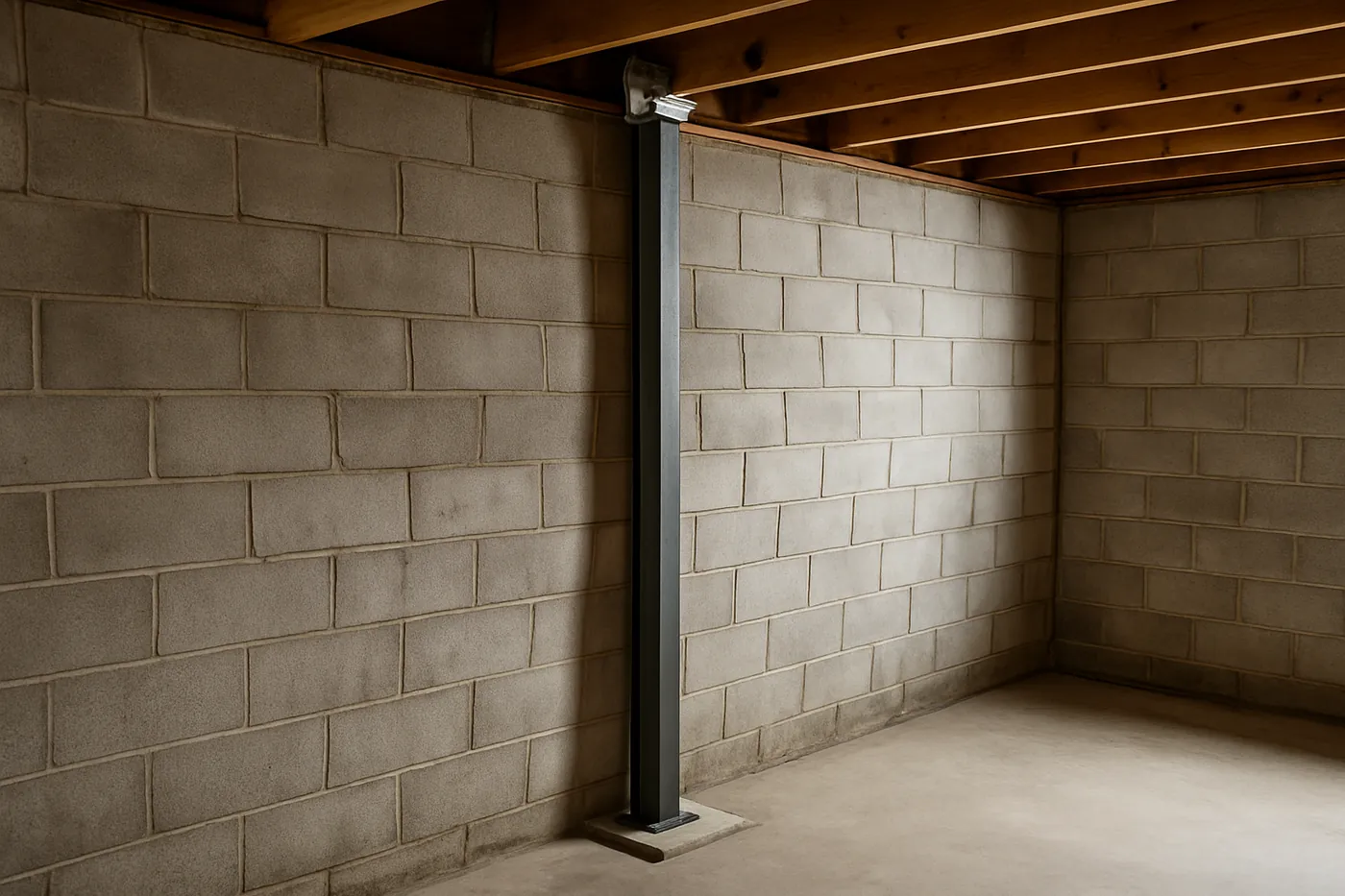
Osage City grew as a coal and railroad town, and much of its building stock dates from that working era. That produces a specific evaluation profile: stone and early block foundations, shallow footings by modern standards, basements built without any expectation of perimeter drainage, and mortar that has spent a century in Kansas freeze-thaw.
These deserve preservation-grade treatment rather than a modern-code assumption: probe before condemning, keep material that's sound, and match what's there. A wall that has carried a building for a hundred years is not a wall that needs replacing because it looks old. It's usually a wall that needs the water routed away from it and its mortar joints addressed.
Shale-derived clay and a thin soil column
Like the rest of Osage County, this is Osage Cuestas ground: alternating limestone and shale close to the surface, with soils weathered from that shale often carrying high shrink-swell potential of their own. The soil column is thinner than the deep loess north of the Kansas River, which cuts both ways: piers reach competent bearing sooner and cost less, while the moisture cycle reaches footings with less depth to dampen it.
Additions, outbuildings, and independent movement
Properties with a long history usually have a long list of construction dates. Additions built in different decades sit on their own footings and move independently of the original structure, and separation at that joint is routinely misread as foundation failure when it's two buildings behaving normally as two buildings. The floor survey distinguishes them, and that distinction can be the difference between a repointing bill and a piering bill.
Asked in Osage City
The building is from the mining era. Is it worth repairing?
Almost always. Working-era construction here was solidly built, and its problems are age-and-moisture problems rather than build-quality problems. Preservation-minded repair (probe first, keep what's sound, match materials) typically costs no more than standard work and preserves a durable building.
The addition is separating from the main house. Foundation failure?
Often not. Additions built in different decades sit on their own footings and move independently: separation at that joint is two buildings behaving like two buildings. A floor survey distinguishes it from genuine settlement, and that distinction can be the difference between a repointing bill and a piering bill.
Does shale really make clay worse?
Shale weathers into clay that frequently carries high shrink-swell potential, so the soil derived from it can be quite active. Combined with a thin soil column over bedrock, that means the seasonal cycle reaches footings with less to dampen it, which is why wall plumb readings matter here.
What does repair cost in Osage City?
The area ranges apply: piers $1,200 to $3,000 each, full repairs $4,000 to $15,000, bowing wall repair $2,500 to $10,000, crack work from about $400. Shallower refusal often trims the pier line relative to counties north of the Kansas River.
What the census says about Osage City homes
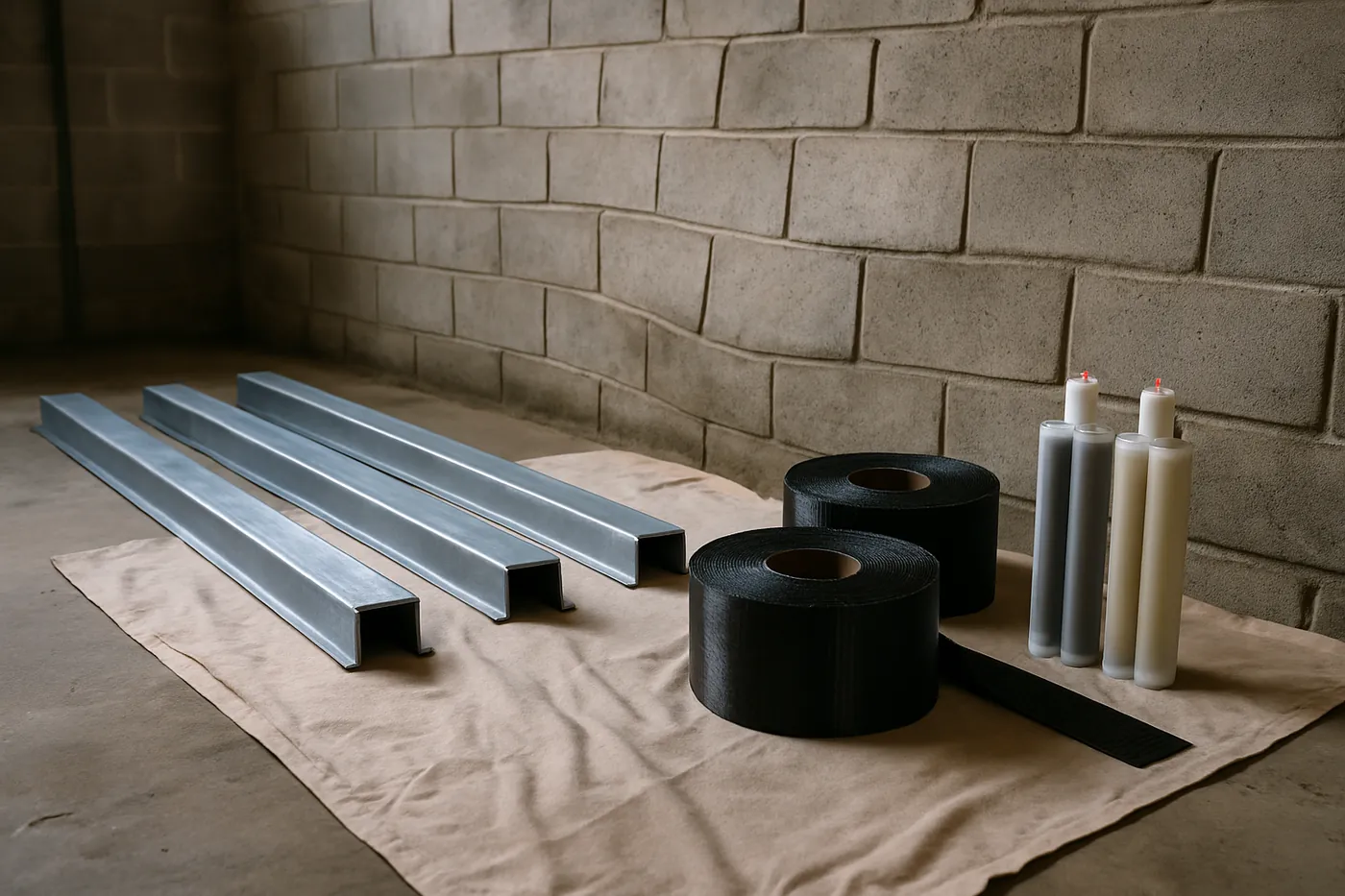
Osage City has about 1,360 homes in the 2020-2024 American Community Survey, with a median build year of 1976. A quarter (26%) were built before 1940 and about 31% before 1960, while the 1980s added another 24%. The survey shows no homes built since 2010. Three in four are owner-occupied, so most foundation calls here come from long-time owners of older houses.
Wabaunsee bedrock and creek-bottom alluvium
Three of five USGS map sample points around Osage City fall on Wabaunsee Group bedrock and two on creek alluvium, so a house's bearing can differ from one side of town to the other. Bottomland lots stay damper than the upland ones; ridge lots sit on the thin, shale-derived soil described above.
Permits in Osage City
The city's website lists City Hall at 201 South Fifth Street (785-528-3714) and links a planning and zoning page, but it does not post building permit rules. Call City Hall before foundation work begins and ask what the city requires.
Measure first, then price: wall plumb, crack widths and orientation, floor elevations, grading and downspouts. See the cost guide or the full service list.
Get a Topeka foundation evaluation
Tell us what the house is doing (a basement wall leaning in, stair-step cracks, doors that stick every August, sloping floors) so the evaluation starts from what you have seen. A local specialist serving Topeka calls you back.