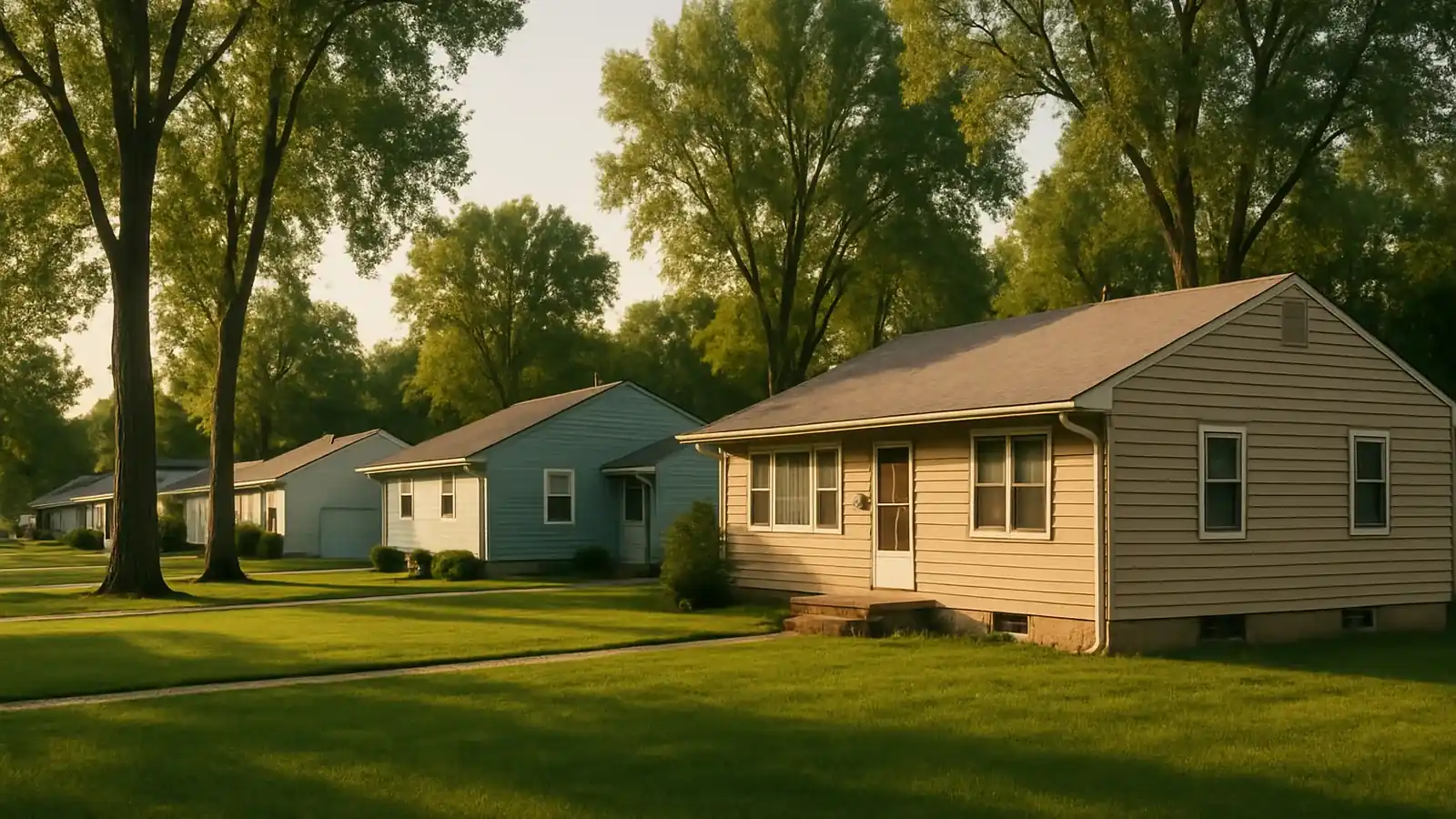
Lawrence foundation repair typically runs $4,000–$15,000 for a full repair, with piers at $1,200–$3,000 each and bowing-wall repair at $2,500–$10,000. Slopes, old stone foundations and shrink-swell clay all play a part here, and the city requires a building permit for repairs that alter the foundation system.
Built on a ridge, which changes everything
Lawrence is the least flat community on this list, and slope is the dominant foundation variable here. The university sits on Mount Oread, and the neighborhoods running off it put a great many houses on cut-and-fill lots or on genuine grade. Two consequences follow.
First, water arrives with momentum. Storm runoff concentrates where the grade sends it, so an uphill foundation wall can take loads a level lot never sees, and the downhill side of the same house may be bone dry. Interception above the house (a swale or a drain line upslope) typically accomplishes more here than anything applied at the wall. Second, cut-and-fill lots settle unevenly: part of the house rests on undisturbed ground and part on placed fill, and the crack often runs along the line where the two meet.
An 1850s town with 1850s foundations
Lawrence was founded in the mid-1850s and burned during Quantrill's Raid in 1863, and the housing that grew back through the following decades is still standing across the older neighborhoods near downtown and Massachusetts Street. Those homes carry stone and early masonry foundations built to the practice of their era: shallow footings, no perimeter drainage, mortar that has now taken a century and a half of Kansas freeze cycles.
They get preservation-grade treatment: probe before condemning, keep sound material, match what's there. A stone wall that has stood since Reconstruction has demonstrated durability. What it usually needs is water routed away and the mortar addressed, not replacement.
Rental stock and deferred reporting
A university town carries a large rental population, and rentals share a specific risk: problems get reported late, because a tenant notices a sticking door long before anyone tells the owner. For Lawrence landlords, an annual walkthrough with a laser level is inexpensive insurance: catching a quarter inch of differential settlement while it's still a drainage correction rather than a pier job. Ask for those to be priced as inspections, not sales calls.
Asked in Lawrence
The house is cut into the hill. Is the slope the problem?
The slope directs the water, and water is usually the problem. An uphill foundation wall holds back both soil and every storm crossing the property above it. Interception upslope (a swale or a drain line above the house) typically accomplishes more than anything applied at the wall itself.
Can an 1800s stone foundation be repaired?
Almost always. Stone walls that have stood since the 1800s have demonstrated they can, and what they typically need is water managed away plus deteriorated mortar addressed. Probe before condemning anything: rebuilding a wall that repointing would have carried is expensive and, on a house like that, a real loss.
I own rentals near campus. How do I stay ahead of problems?
An annual walkthrough with a laser level is the cheapest insurance available. Tenants notice sticking doors long before owners hear about them, and catching a quarter inch of differential settlement early usually means a drainage correction instead of a pier job. Ask for those to be priced as inspections.
Is Douglas County within the service area?
Douglas County is within the service area; ask about any travel charge when the specialist calls. If travel is charged, ask for it as its own line in the scope rather than folded into others.
Lawrence by year built, and by who lives there
Lawrence has about 44,100 housing units in the 2020-2024 American Community Survey, with a median build year of 1988. Nearly 10% were built before 1940 and about 17% before 1960, the older stock near downtown described above, while some 31% date from 2000 or later. Only about 44% of occupied homes are owner-occupied; the majority are rented, which is why the landlord advice above matters here more than in any other town on this site.
The Kansas River, the Wakarusa and the city's stormwater rules
USGS gauges the Kansas River at Lawrence and the Wakarusa River near Lawrence, and the USGS state geologic map shows river alluvium near the Kansas River with Douglas Group bedrock to the south and west. The city's Municipal Services and Operations department runs the stormwater program under a state MS4 permit, charges a stormwater fee based on impervious area, and takes reports of blocked inlets, sinkholes and failing driveway culverts. It notes that grading disputes between neighbors are generally between the owners unless the land is in a drainage easement.
What Lawrence requires for foundation work
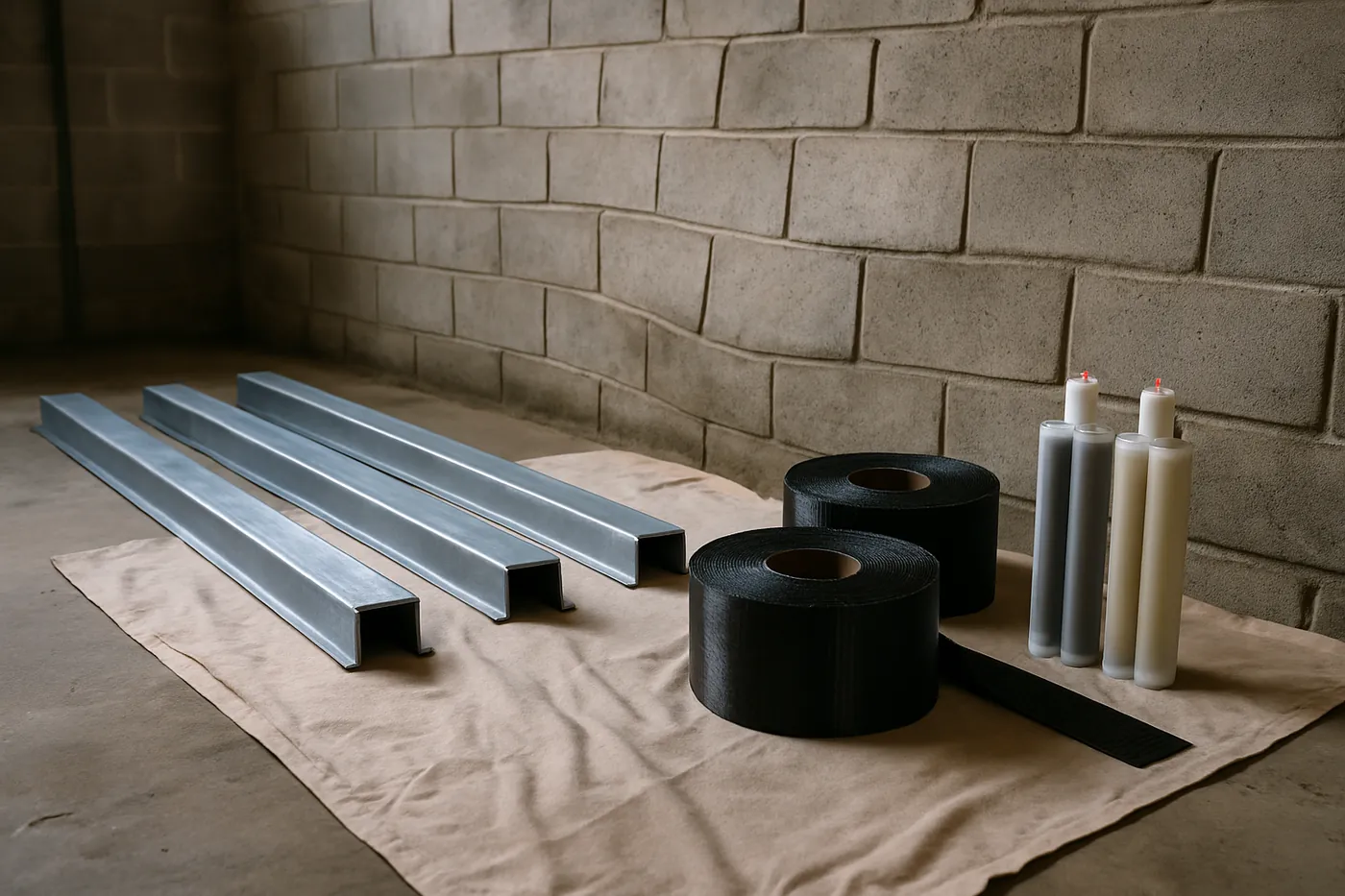
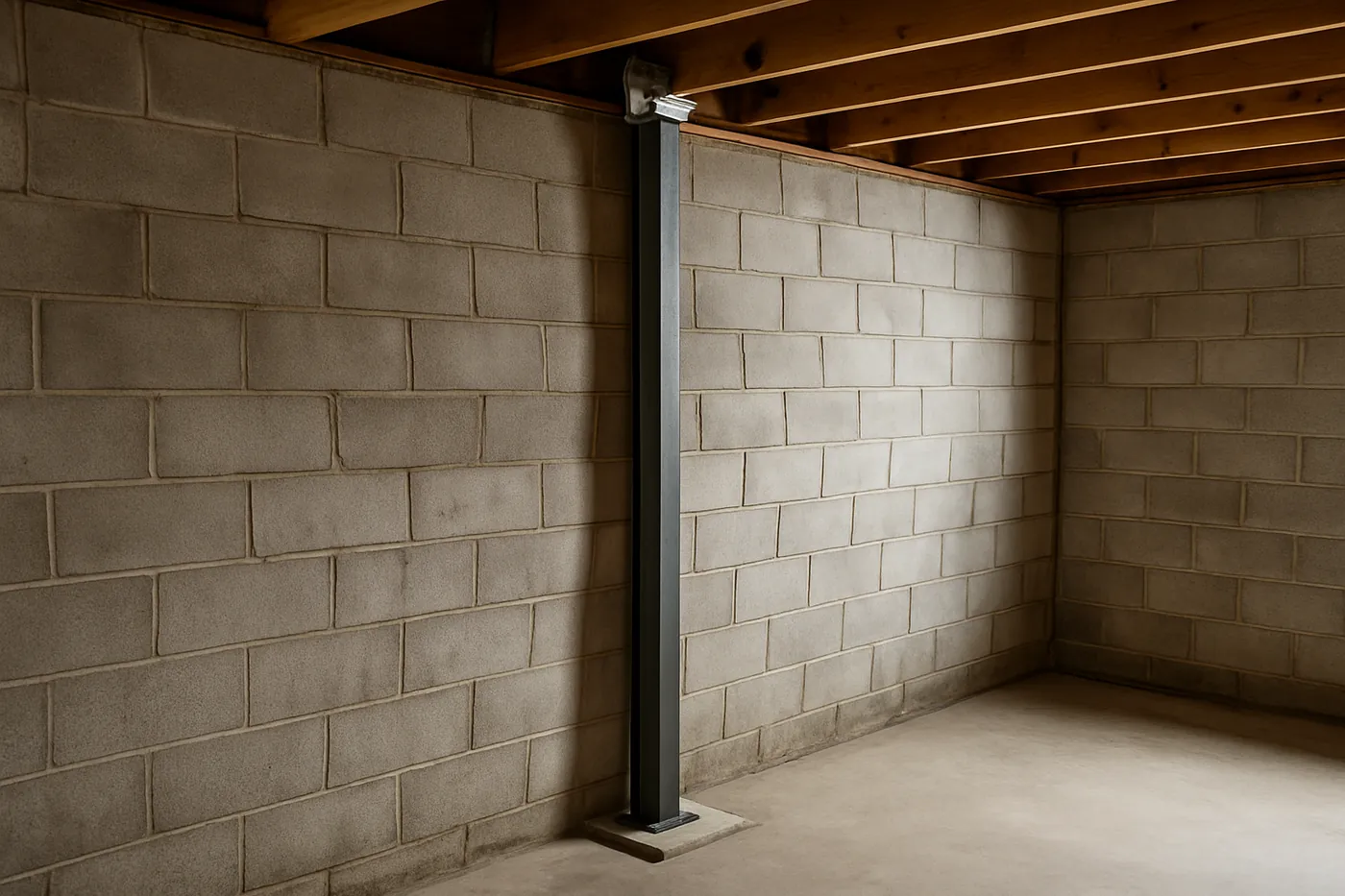
Lawrence publishes its own foundation-repair guideline. It says repairs that alter the foundation system, such as added piers, steel posts, helical piers, beams or tie-back anchors, need a building permit, and so do basement drainage systems. Waterproofing, crack injection and mudjacking may be exempt as minor maintenance. Plans must show licensed contractors and either an evaluation report for a pre-engineered system or a Kansas engineer's report. Ask the specialist who pulls the permit.
A local specialist who serves Lawrence calls you back to set a time. The cost guide explains each number, and service areas covers the rest of the region.
Get a Topeka foundation evaluation
Tell us what the house is doing (a basement wall leaning in, stair-step cracks, doors that stick every August, sloping floors) so the evaluation starts from what you have seen. A local specialist serving Topeka calls you back.