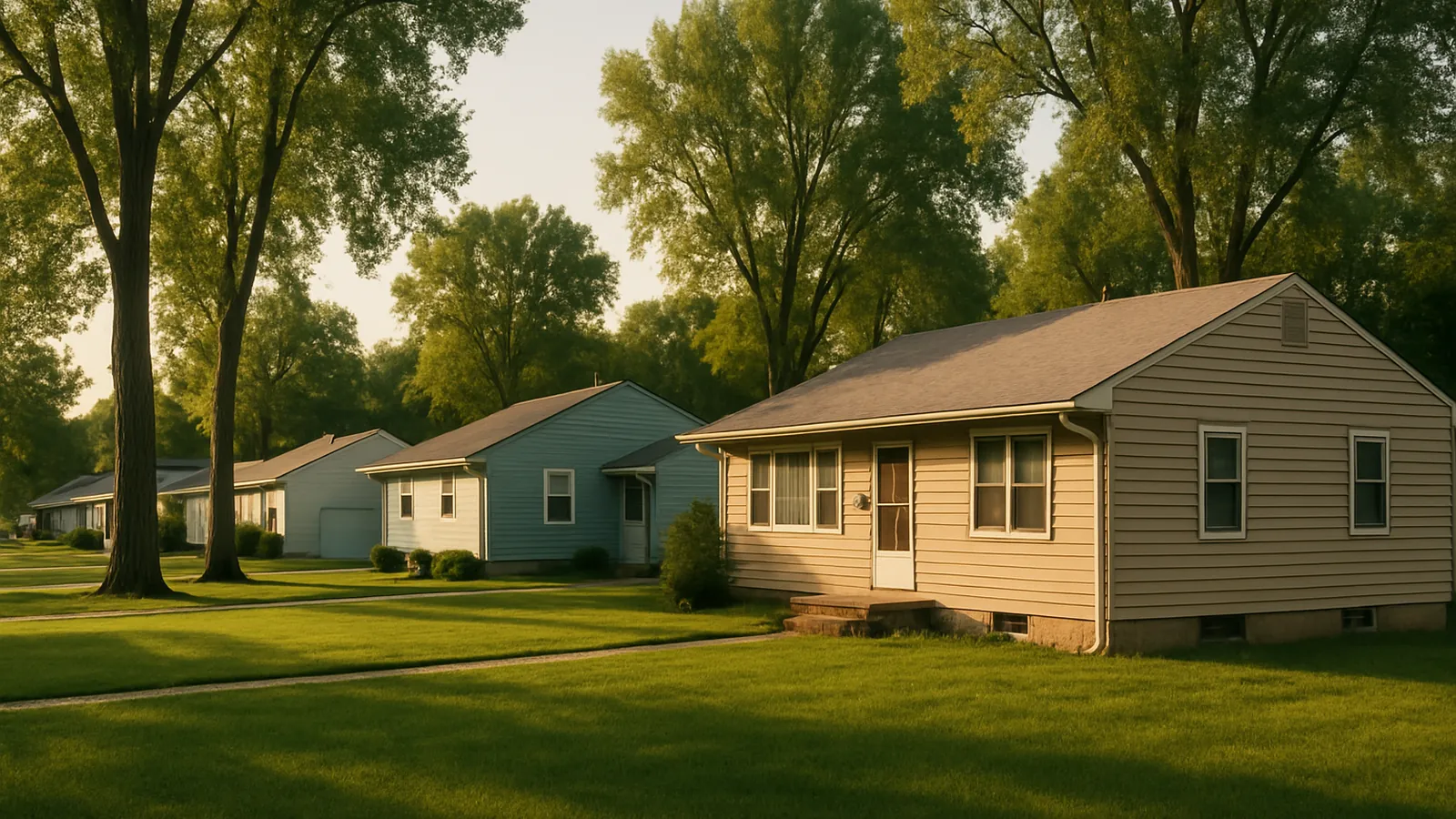
Carbondale homeowners pay $4,000–$15,000 for most structural foundation repairs, from about $400 for a single crack injection. Clay withdrawing support through a dry August and pressing back each spring is the mechanism — and it's what a measured evaluation is built to detect before it worsens.
The name is the geology lesson
Carbondale is named for coal, and Osage County's coal field was worked for decades — which makes this the part of our service area where knowing the land's history genuinely changes an evaluation. Historic mining leaves ground that isn't uniform: worked areas, spoil, filled cuts, and regraded surfaces that don't behave like undisturbed soil.
To be clear about what this does and doesn't mean: most Carbondale homes sit on ordinary ground and have ordinary foundation problems, driven by the same shrink-swell clay that moves houses across this region. But when a settlement pattern doesn't match the seasonal story — localized, sudden, or deeper than the symptoms suggest — the county's history is a reason to look harder before quoting a pier depth, and to log refusal pressure carefully on every pier rather than trusting that firm-feeling material is native bearing.
Cuesta country: shallow bedrock, thin soil
Carbondale sits in the Osage Cuestas, the alternating limestone-and-shale belt of eastern Kansas. Soils here run thinner over that bedrock than the deep loess north of the Kansas River, and shale weathers into clay that is often highly expansive in its own right. Thin, active soil over competent rock is a specific combination: piers find bearing relatively quickly, while the shallow soil column delivers the moisture cycle to footings and basement walls with less depth to buffer it.
What an evaluation looks for here
Wall plumb on every basement wall, floor elevations across the plan, crack orientation and width, and the outside water path — the standard method. What gets extra attention is any mismatch between the symptom pattern and the seasonal explanation, because in Osage County that mismatch has more possible causes than it does elsewhere.
Asked in Carbondale
Does the old mining history affect residential foundations?
Rarely in a direct way — most homes here sit on ordinary ground with ordinary seasonal clay problems. But when a settlement pattern doesn't match the seasonal story, that history is a reason to look harder before quoting pier depth and to log refusal pressure carefully rather than trusting firm-feeling material.
What are the Osage Cuestas?
The belt of alternating limestone and shale that shapes eastern Kansas south of the Kansas River, forming long east-facing ridges. For foundations it means soils run thinner over bedrock than the deep loess to the north, and shale weathers into clay that's often highly expansive in its own right.
Is thin soil over rock good or bad for my foundation?
Mixed. Piers reach bearing sooner, which lowers cost. But a thin soil column delivers the seasonal moisture cycle to footings and basement walls with less depth to buffer it, so the movement that does occur can be more direct. Neither fact is knowable without measuring your specific lot.
Is Osage County within your service area?
Osage County is within our service area: Carbondale and the surrounding Osage County communities are on our regular southern route, with travel quoted openly in the scope. Evaluations schedule on the same timeline as the rest of the area.
Next step for your Carbondale house
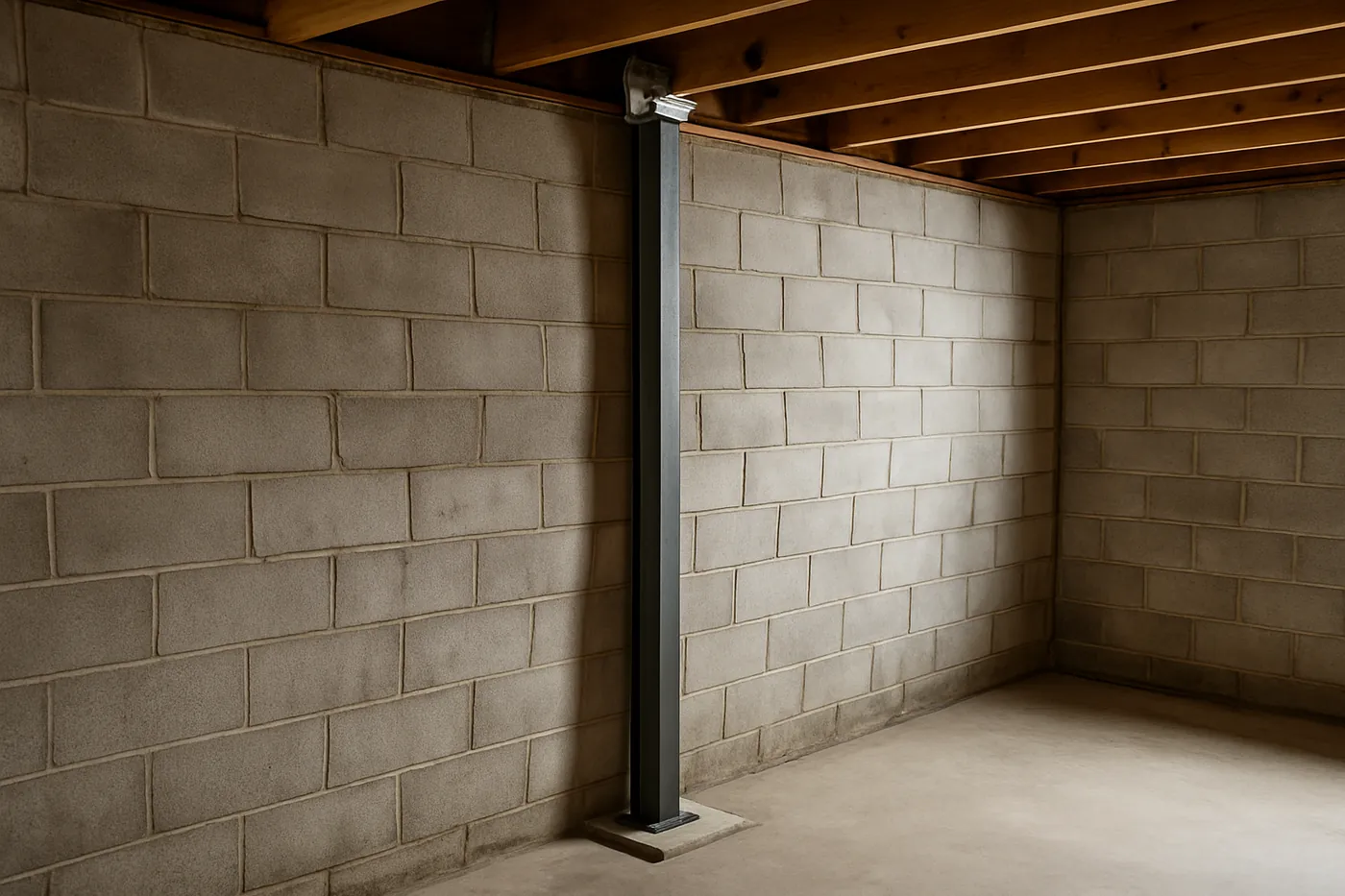
Drop a plumb line on the basement wall, mark and date any crack, then get the baseline — knowing is cheap. The free evaluation takes about an hour and leaves a written report with wall deflection and floor elevations. Costs are itemized in the cost guide; nearby communities are under service areas.
Get a free Topeka foundation evaluation
Tell us what the house is doing — a basement wall leaning in, stair-step cracks, doors that stick every August, sloping floors — and we’ll schedule an evaluation with photos, wall measurements, and floor elevations. We reply the same business day.