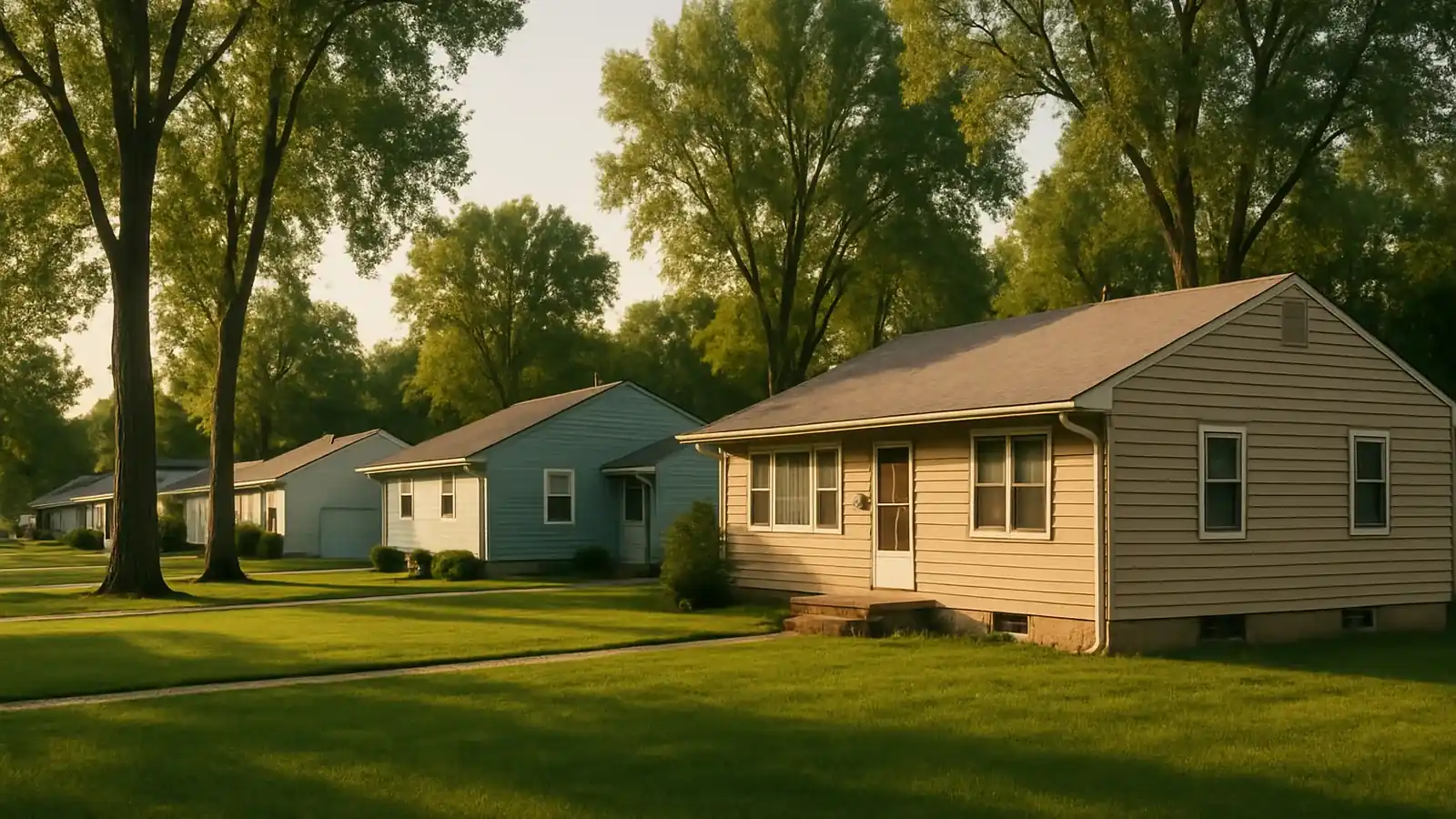
For an Auburn house, most full foundation repairs total $4,000–$15,000; piers usually price at $1,200–$3,000 apiece and bowing-wall repair at $2,500–$10,000. Basements are common here, and shrink-swell clay that soaks up spring rain and dries out by late summer is what pushes those walls inward.
The transition zone, and why it changes pier depth
Head southwest from Topeka and the ground begins to change. The deep valley alluvium and thick upland loess give way toward the Osage Cuestas: the belt of alternating limestone and shale that shapes eastern Kansas south of the Kansas River. Bedrock sits closer to the surface out here than it does north of the river, and that has one very practical consequence.
Piers reach refusal faster. Where a Jefferson County pier may travel a long way through glacial till and loess before finding bearing, an Auburn pier can hit competent material much sooner. That usually means fewer pier sections per location and a lower price, but only if the crew is logging refusal pressure rather than driving to a number someone specified in the office. Shallow refusal that is genuinely rock reads differently from shallow refusal that's a stiff clay lens, and the pressure log is how you tell.
Rural lots, longer water paths
Auburn properties tend to be larger than city lots, and larger lots move more water. Runoff crosses more ground before it reaches the house, picks up more volume, and frequently arrives from a direction that isn't obvious from the yard. Evaluations here spend more time outside than a subdivision call does: walking where the lot drains, where the neighboring ground sends water, and where a driveway or an outbuilding has changed the path since the house was built.
The same clay, a shorter fuse
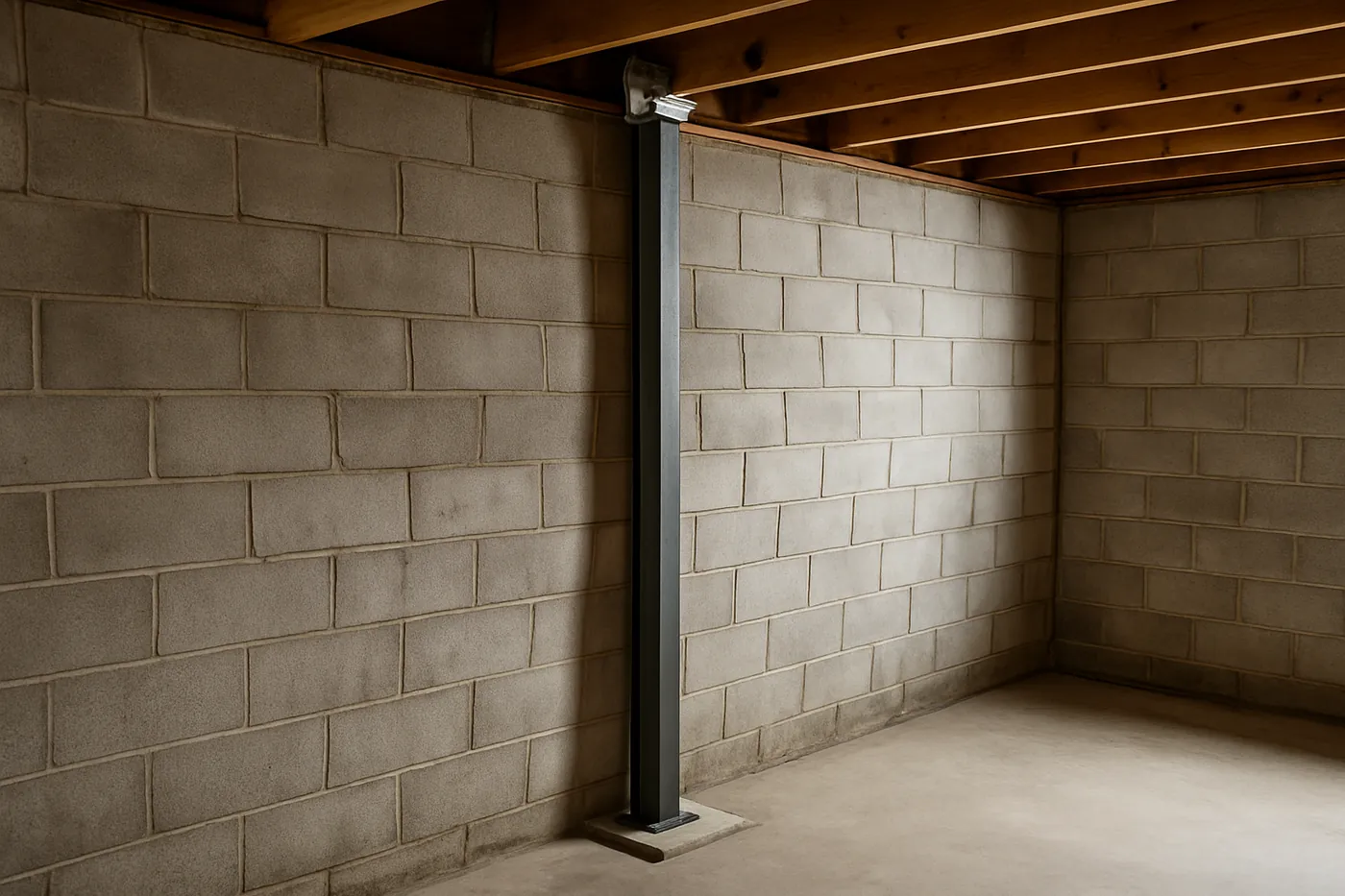
Shrink-swell clay still does its work here, and full basements are still the norm, so wall movement remains the failure to watch for. What differs is the soil column above bedrock: thinner, which can mean the moisture cycle reaches the footing more directly. A plumb line on the basement walls is the five-minute check worth doing before anything else.
Asked in Auburn
Why would piers cost less out here than in Topeka?
Shallower bedrock. Auburn sits toward the Osage Cuestas, where limestone and shale are closer to the surface than in the deep loess north of the Kansas River, so piers often reach competent bearing with fewer sections. Piers are priced per section, so shorter piers cost less.
How do you know a pier hit rock and not just stiff clay?
Refusal pressure, logged per pier. Competent rock produces a different pressure signature than a stiff clay lens that a pier could eventually punch through. On transitional ground like this that log is the documentation separating engineered work from hopeful work. Ask to see it on any bid.
The lot is large. Does that change the evaluation?
It lengthens the outside portion. Larger lots collect and route more runoff before it reaches the house, often from a direction the yard doesn't suggest. Evaluations here spend real time walking the water path, because out here that path explains more crack patterns than the cracks do.
Are basement walls still the main concern here?
Basement walls are still the main concern here. Full basements are the norm and shrink-swell clay still does its work, so inward wall movement remains the failure to watch for. A plumb line dropped from the top of each basement wall is the five-minute check worth doing before anything else.
Auburn's 1970s housing
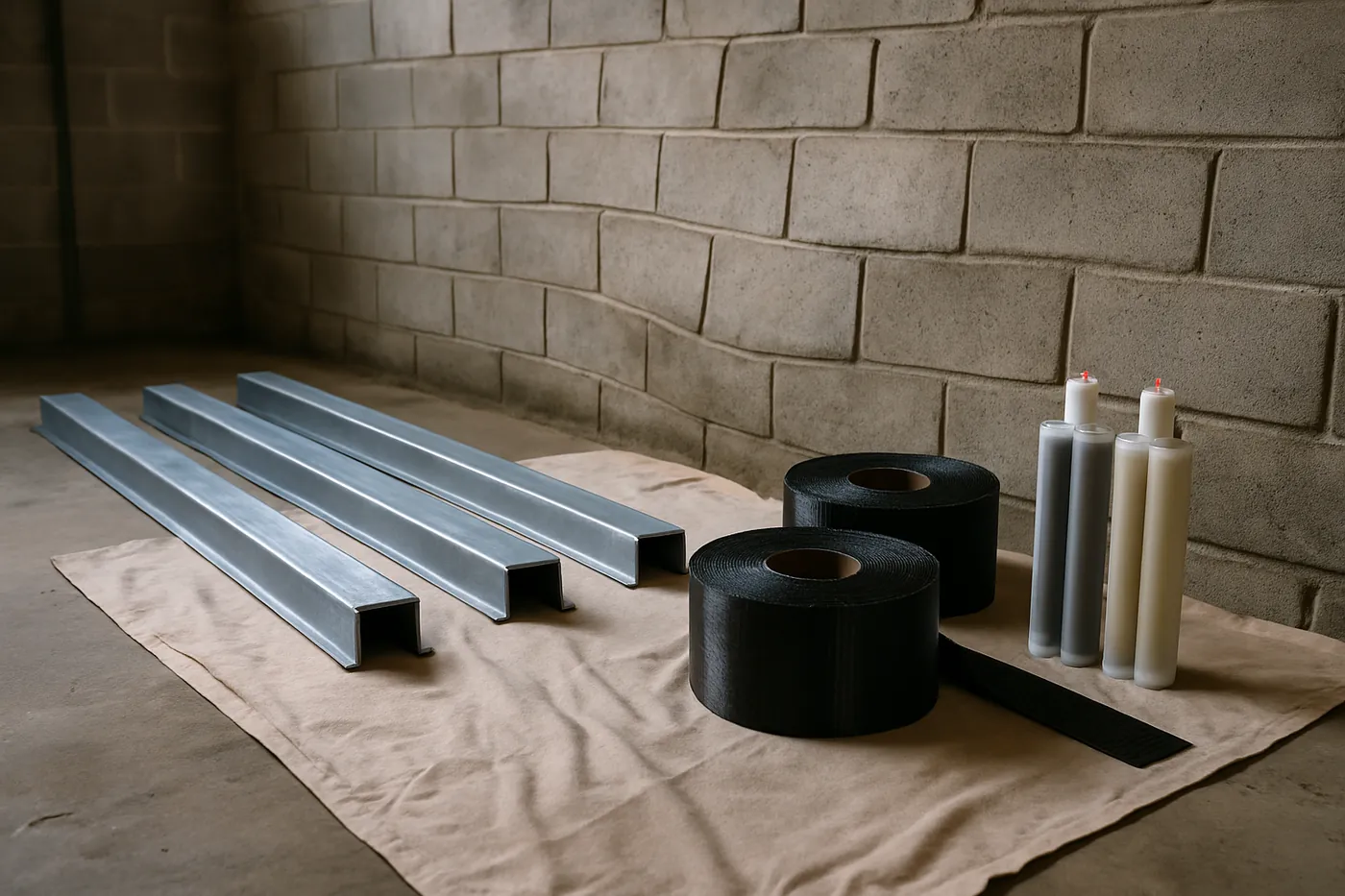
Auburn is a small city of roughly 490 homes in the Census Bureau's 2020-2024 American Community Survey, and almost half of them (47%) were built in the 1970s. The median year built is 1978, about 19% went up in the 1990s, and only around 15% date from 2000 or later. That makes the typical Auburn basement close to fifty years old: long enough for decades of wet-dry cycling to show up as wall cracks or a slight inward lean.
Wabaunsee rock and the Wakarusa headwaters
Each of five sample points the USGS state geologic map places around Auburn falls on the Wabaunsee Group, the limestone-and-shale bedrock behind the shallower pier refusal described above. USGS has logged measurement sites on the Wakarusa River about four miles west of town and on tributaries of Sixmile Creek to the northeast. A lot that drains toward one of those draws can send water at a basement wall from an angle the house itself doesn't suggest.
Which office handles an Auburn permit
Shawnee County's building-permit page covers the unincorporated county only, and Auburn is an incorporated city. For a house inside Auburn's limits, ask Auburn City Hall whether pier work or a wall repair needs a permit before the specialist schedules it.
A local specialist who serves Auburn calls you back to set a time. The cost guide explains each number, and service areas lists the rest of the region.
Get a Topeka foundation evaluation
Tell us what the house is doing (a basement wall leaning in, stair-step cracks, doors that stick every August, sloping floors) so the evaluation starts from what you have seen. A local specialist serving Topeka calls you back.