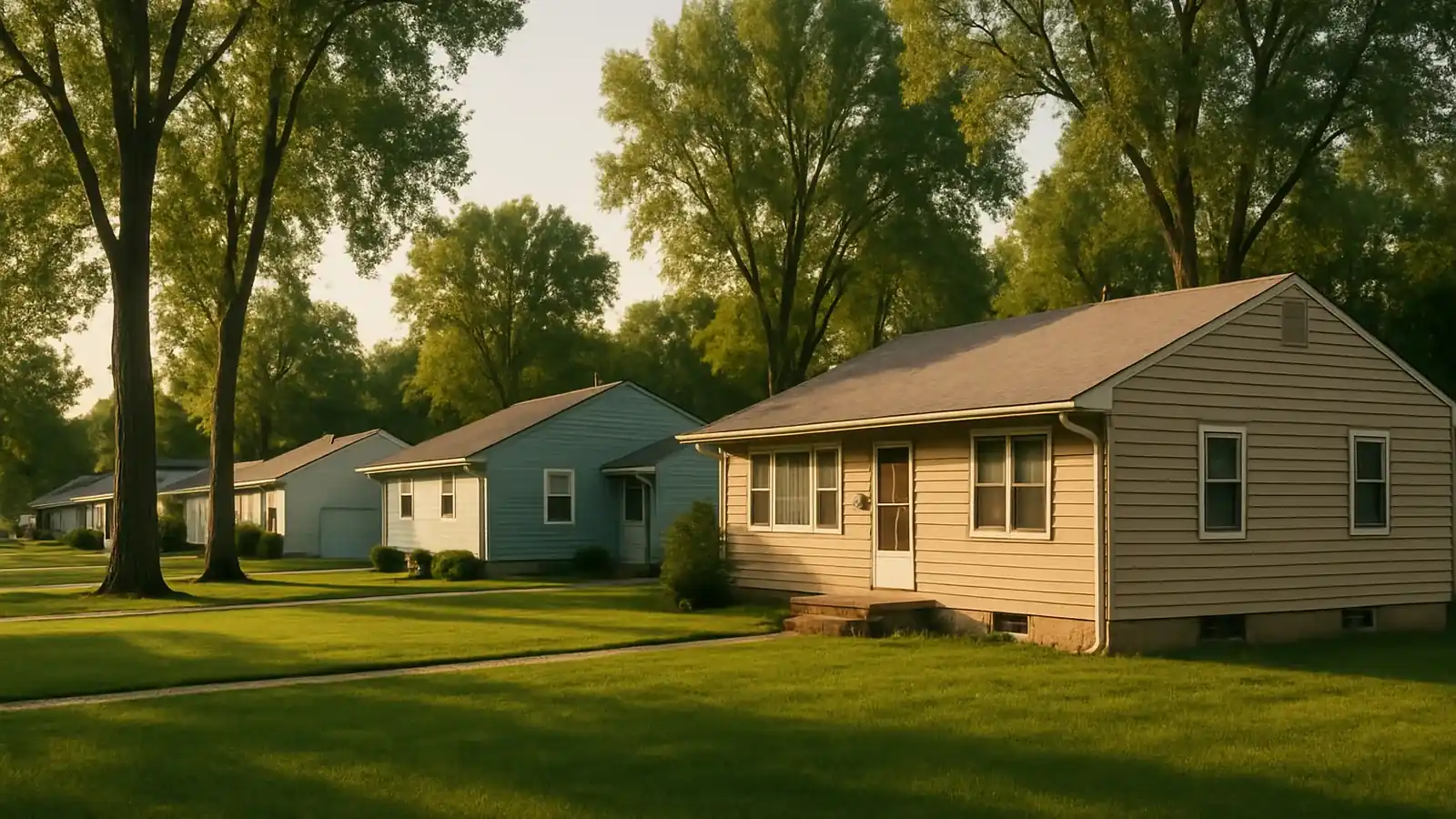
In Perry, most structural foundation repairs cost $4,000–$15,000, and a single crack injection starts around $400. Clay loses volume through a dry August and pushes back each spring, and a measured evaluation is how that cycle's damage gets caught early.
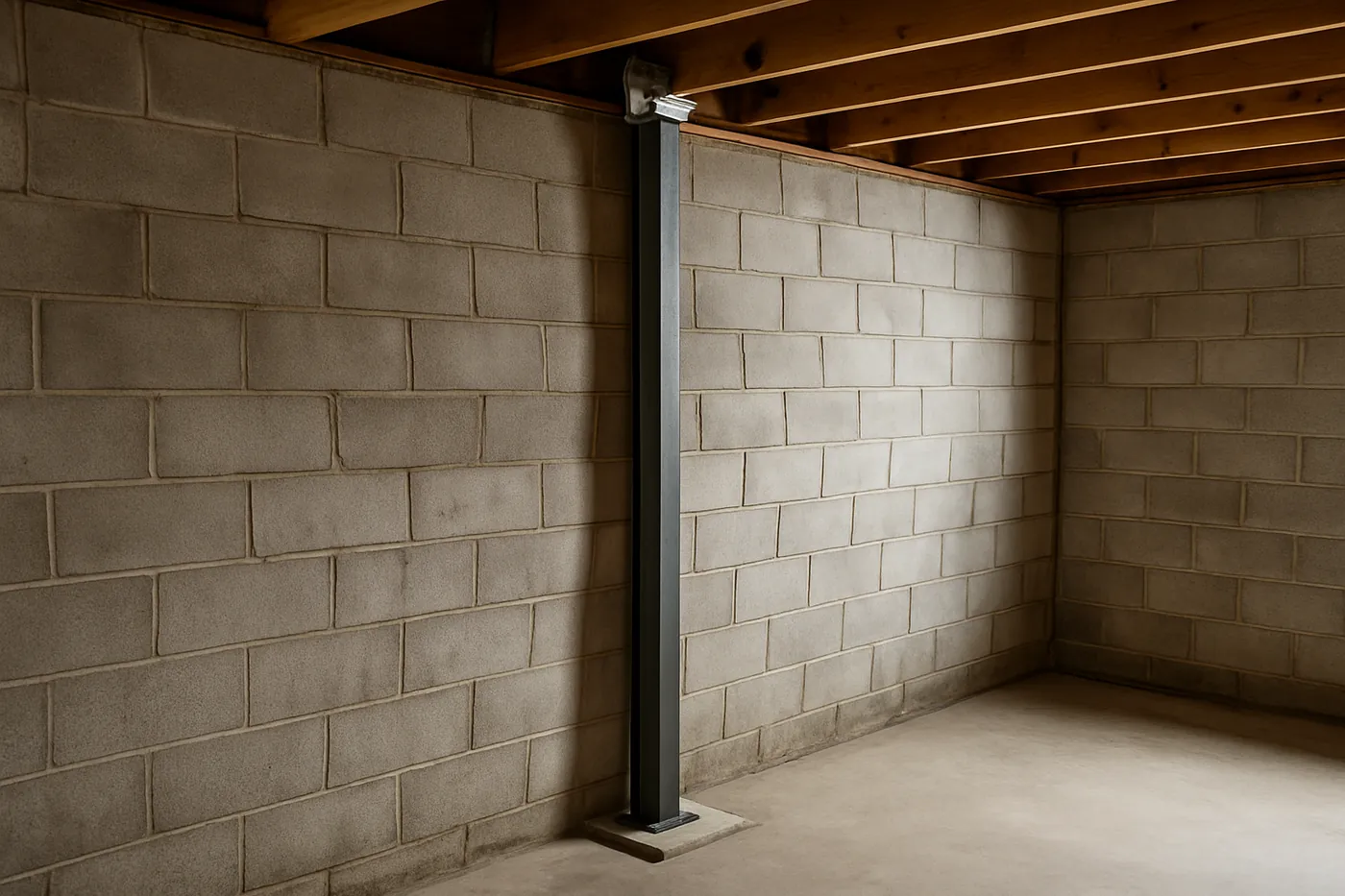
Reservoir country with genuine terrain
Perry sits in Jefferson County near Perry Lake, the Corps of Engineers reservoir on the Delaware River, and this is noticeably more varied terrain than the flat Kaw valley to the south. Slope changes the foundation conversation in two ways.
Storm water arrives with momentum and concentrates where the grade sends it, so an uphill foundation wall takes runoff loads a level lot never experiences. And building on slope usually means cut-and-fill lots, where part of a house sits on undisturbed ground and part on placed fill: two portions settling on different schedules, with the crack frequently running along the line where they meet. Locating that boundary is the first task on a Perry evaluation, because it sets both pier placement and pier depth.
Glaciated ground: deep soil, unpredictable refusal
Jefferson County is north of the glacial limit, which means glacial till and thick loess rather than the shallow limestone and shale south of the Kansas River. Piers here may travel considerably farther to reach bearing than they would in Osage County, and the layers interleave over short distances, so refusal depth is measured per pier and its pressure logged, rather than specified from the office.
Lake-area properties and seasonal water
Properties nearer the reservoir and its drainage carry more variable soil moisture than upland lots, which moderates the dry-season shrinkage that drives settlement elsewhere while adding sustained dampness against foundations. Scopes here weigh drainage design more heavily and price structural work where the survey actually shows movement, and because this is loess country, they also flag any concentrated water source as a collapse risk worth correcting on its own.
Asked in Perry
Does living near the lake change my foundation risk?
It changes the moisture pattern. Properties nearer the reservoir and its drainage carry more variable soil moisture than upland lots, which moderates dry-season shrinkage while adding sustained dampness against foundations. Scopes here weigh drainage more heavily and price structural work to what the survey shows.
How do I know if my house sits on fill?
The crack pattern often tells the story before the records do: cut-and-fill houses crack along the line where the two meet rather than at a random corner. A good evaluation reads the floor survey against the topography and any available development records, because that boundary sets both pier placement and depth.
Why are pier depths so unpredictable in Jefferson County?
Glaciation. This is north of the ice limit, so glacial till and thick loess replace the shallow limestone and shale found south of the Kansas River, and those layers interleave over short distances. Refusal depth gets measured per pier and its pressure logged rather than specified in advance.
Is a sloped lot worse than a flat one?
Not inherently: genuine fall away from the house sheds water, which removes half the problem. What hurts is slope that concentrates runoff at a foundation wall, or a cut-and-fill pad settling unevenly. Both are visible on an evaluation, and the fix for the first is usually upslope and inexpensive.
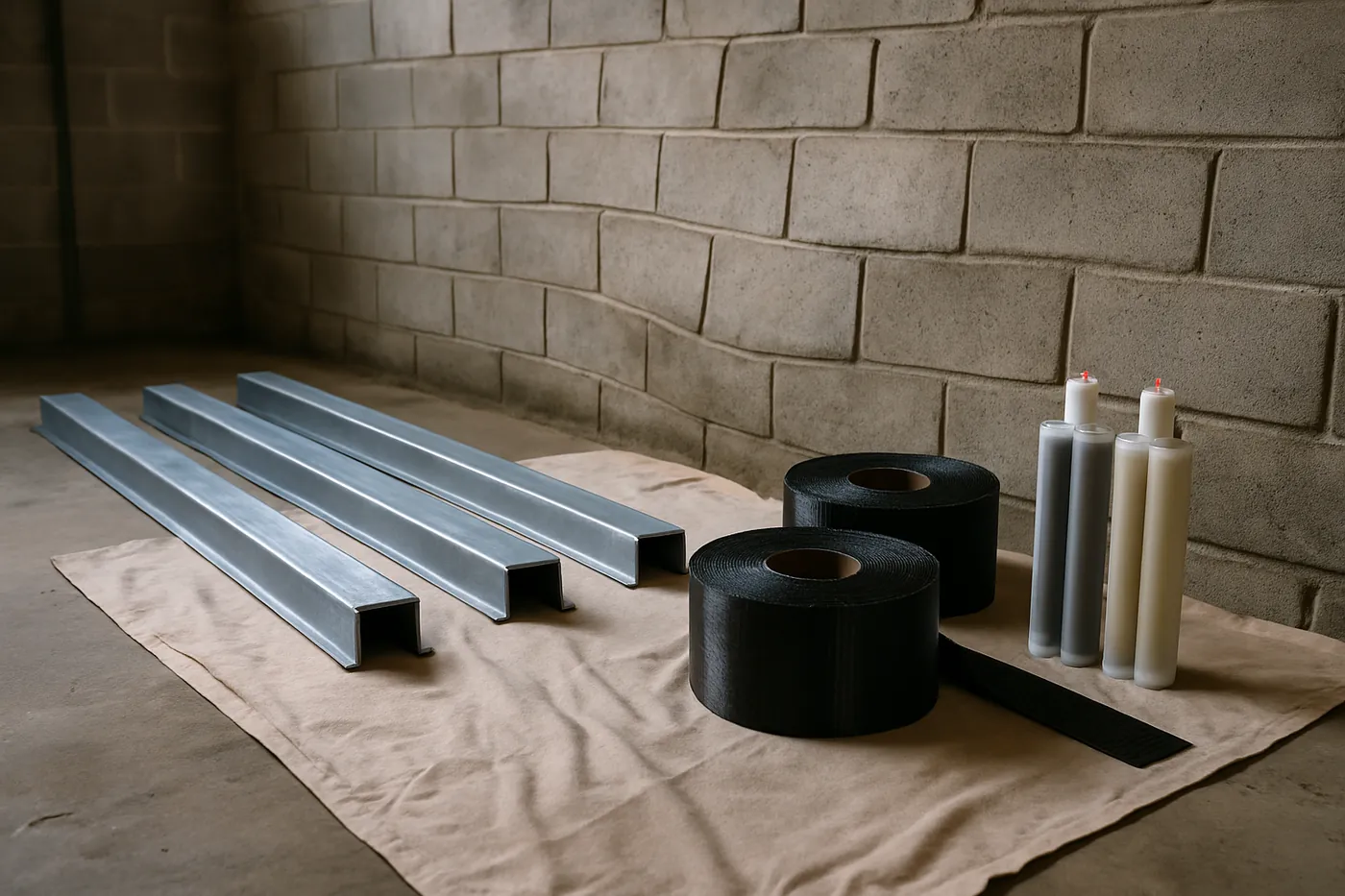
Perry's housing: older than it looks
The Census Bureau's 2020-2024 survey counts about 455 homes in Perry, with a median build year of 1975. About 20% predate 1940 and a third predate 1960, yet the 1980s were the busiest single decade (23%). Fewer than 9% are from 2000 or later, and nearly four in five are owner-occupied.
The Delaware River gauge at Perry
USGS has measured the Delaware River at Perry, below Perry Lake, with daily records back to 1969, and also gauges the Kansas River downstream at Lecompton. The USGS state geologic map shows Shawnee Group bedrock around town with river alluvium on the low ground. Lots on that low ground deserve the seasonal-water questions raised above before any structural price.
Perry's own building permit
The City of Perry issues its own building permit. The application has boxes for construction, repair, move and demolition, asks whether the property is in a special flood hazard area, and goes to the city's zoning administrator. The city lists a footing inspection among the stages of new work. Questions go to City Hall at 205 West Bridge Street ((785) 597-5613).
Drop a plumb line on the basement wall, mark and date any crack, then book the evaluation. Costs are itemized in the cost guide; nearby communities are under service areas.
Get a Topeka foundation evaluation
Tell us what the house is doing (a basement wall leaning in, stair-step cracks, doors that stick every August, sloping floors) so the evaluation starts from what you have seen. A local specialist serving Topeka calls you back.